
Is There a Cost Premium for Passivhaus? What You Need to Know
May 2021
This article was originally published in 2021 and last updated in September 2026 to reflect current Passivhaus projects, costs, and industry data.
Cost is one of the most common and understandable questions clients ask when considering Passivhaus. While Passivhaus is often associated with a significant cost premium, the reality is more nuanced, with some projects achieving modest premiums, cost neutrality, or even savings when performance is considered early in the design process.
If you’re considering a project and would like to speak with a Passivhaus architect in Melbourne, you can learn more about our approach here.
This guide explains typical Passivhaus costs in Melbourne and Victoria, including premiums, potential savings, retrofit considerations, and the key factors that influence overall project budgets.
What is the typical Passivhaus premium in Melbourne?
In Melbourne and regional Victoria, the cost premium for Passivhaus varies significantly depending on project type, form factor, glazing ratios, builder experience, and site constraints.
- Some projects see a modest premium when performance is integrated early.
- Some higher-budget homes may approach cost neutrality under specific conditions.
- Tight-budget projects or complex retrofits are more likely to experience a premium.
- Every project must be assessed on a case-by-case basis.
Is there a premium to go Passivhaus?
People are often drawn to Passivhaus because of the comfort, energy efficiency and long-term performance it offers. However, the potential additional cost of achieving the Passivhaus standard is understandably an important consideration.
In practice, the cost premium can vary considerably from project to project.
On one of our projects, the client asked a very direct and reasonable question: what is the cost premium of taking the project to the Passivhaus standard? In consultation with the builder, we estimated the additional cost at approximately 2.5 per cent of the Cost of Works.
It is important to note that, in this case, the existing portion of the house was not being upgraded to the Passivhaus standard, so the 2.5 per cent figure should not be taken as representative of all Passivhaus projects. Even so, it illustrates that the premium can be relatively modest when Passivhaus principles are integrated thoughtfully and early in the design process.
This aligns with our broader experience: Passivhaus is not inherently expensive, but it is sensitive to budget, scale, and design approach.
International and Australian Context
International Passive House Association guidance indicates that, in Germany, the additional upfront cost of building to the Passivhaus standard is typically around 3–8 per cent. As the market has matured and Passivhaus components and expertise have become more widely available, these additional costs have reduced.
Australia remains an emerging market. Local cost outcomes vary significantly depending on climate, builder experience, and project complexity. While examples of cost-neutral outcomes exist, they are not universal and should not be assumed.
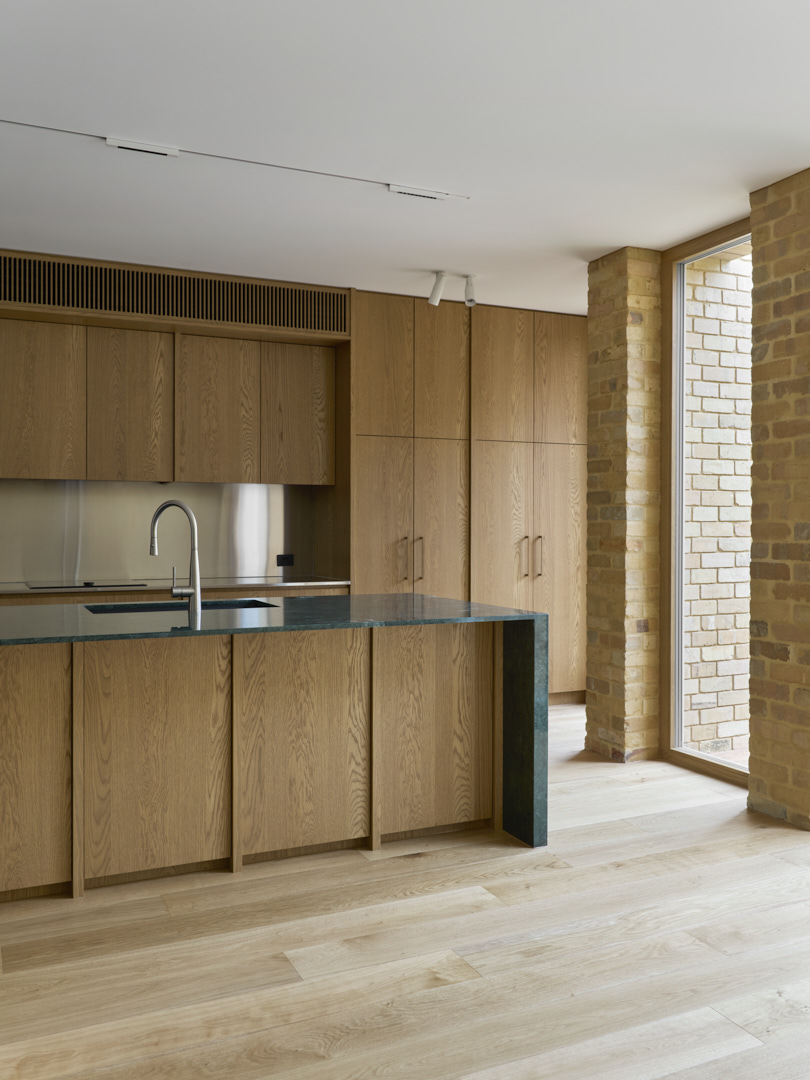
Our Fitzroy retrofit project , which was certified to the Passivhaus Classic Plus standard, started with a Master Plan.
Melbourne & Victoria Passivhaus Cost Premium
In Melbourne and across Victoria, there is often a cost premium associated with achieving the Passivhaus standard. However, with careful design and early consideration of Passivhaus requirements, this premium can be modest and, in some projects, may be offset by design efficiencies.
Victoria Cost Savings
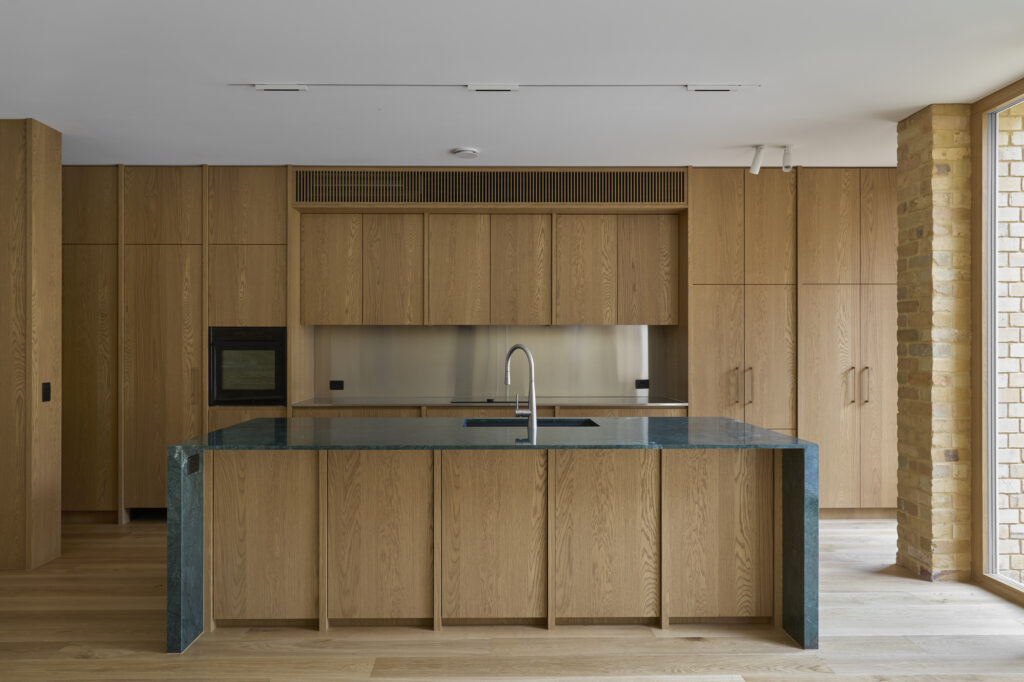
Two Victorian homes provide interesting examples of potential cost savings. Both had been fully designed, documented and costed by a builder before the decision was made to take them to the Passivhaus standard. Following redesign and optimisation, the projects achieved reported construction cost savings of 7 per cent and 15 per cent, without visible changes to the overall design. These savings resulted from a combination of factors.
It is important to note that these were relatively large, higher-budget homes, measuring approximately 240 m² and 360 m². Their construction rates per square metre were also higher than a standard project home. A smaller home with a tighter budget would not necessarily achieve similar savings. You can read more about these two projects here.
Low Budgets
Square metre rates are highly sensitive to site, complexity, finish level, and market conditions, and should only be considered indicative.
If you are starting with a tight budget, there is likely to be a premium associated with achieving Passivhaus certification. In Victoria, the entry level for a very basic, customised Passivhaus home was generally considered to start at approximately $2,500 per square metre (2020 rates). By way of comparison, a modest Passivhaus granny flat delivered at the time sat at approximately $2,550 per square metre, excluding site-specific costs (2020 rates).
By contrast, we currently have a Passivhaus new-build project under construction, with construction costs in the order of $6,000 per square metre (2025 rates), excluding the garage. The home has a good form factor but is relatively small and is being built on a sloping site, both of which contribute to a higher square-metre rate.
General Cost Considerations for Passivhaus in Victoria
When considering a Passivhaus project in Victoria, some general cost considerations include:
- For entry-level budgets, the Passivhaus premium may be proportionally higher.
- For higher-budget projects, the premium may be lower or, in some cases, offset by other design efficiencies.
- Cooler regions may require higher levels of insulation and higher-performing glazing.
- Higher-altitude sites may increase construction costs.
Cost Premium & Smart Design
In some Australian projects, reported premiums have been low where Passivhaus performance was integrated early and design efficiency was prioritised. However, outcomes vary considerably depending on the site, scale, complexity and design of each project.
Smart Design & Cost Reduction Strategies
Careful design can help minimise the cost premium associated with Passivhaus and, in some cases, may result in cost neutrality or an overall saving. Some strategies include:
- A site with good northern orientation and minimal overshadowing from neighbouring buildings or vegetation.
- A favourable ‘Form factor’, which you can learn more about here.
- Minimisation of thermal mass (concrete, which is typically more expensive and is not required in a Passivhaus, unlike a passive solar design).
- Carefully managing glazing ratios and window specification to balance daylight, solar gain, cost, and performance.
- Analysing the brief to reduce the overall building area, for example replacing walk-in-robes with a robe, having a study nook as opposed to a study, having a second living area double up as a guest room with either a fold-out bed or murphy bed.
This is why early planning, often beginning with a Master Plan or Feasibility Study, is important in aligning performance targets, budget and scope before detailed design begins.
Other Factors Affecting Costs
As with any building project, a range of other factors can influence construction costs, including:
- Site location
- Site access
- Soil classification
- Slope of land and terrain
- Demolition
- Parking
- Project’s size
- Construction type
- Selection of materials and finishes
- Market conditions
- Bushfire Attack Level (BAL), if applicable
- Septic system, if required
Passivhaus Software & Cost Savings
The Passive House Planning Package (PHPP) is a detailed performance modelling tool that has been shown to provide reliable predictions of a building’s energy performance in practice.
One benefit of PHPP is that its detailed modelling can help avoid the over-specification of building components and systems. For example, where a split-system air conditioner is required, PHPP can be used to accurately determine the heating and cooling loads, allowing the system to be appropriately sized rather than oversized.
Life Cycle Costs
When building a Passivhaus, whole-of-life costs should also be considered. Passivhaus buildings can reduce heating and cooling energy use by up to 90 per cent compared with typical building stock, significantly reducing ongoing energy costs. Higher build quality may also contribute to lower maintenance costs over the life of the building. Some lenders now recognise energy-efficient homes within green loan frameworks, although terms and eligibility vary.
Retrofit and Passivhaus Premium
The cost premium for an EnerPHit retrofit depends on the existing building, its construction and the extent of work required to achieve the EnerPHit standard. Each project needs to be assessed on a case-by-case basis.
Managing Costs
When considering a Passivhaus new build, alteration or addition, or an EnerPHit retrofit, it is important to understand the overall project budget. This should include the Cost of Works, architect/designer and specialist consultants’ fees, as well as other project costs such as landscaping, loose furniture, bank fees and relocation costs.
It is also important that your budget is appropriate for your brief and, if necessary, that either the budget or brief, or both, are adjusted. As the design develops, construction cost estimates should be obtained and regularly updated to ensure the project remains aligned with the available budget.
Conclusion
As with all projects, it is important to understand the likely costs before proceeding with the project’s design and documentation stage. This is particularly important for Passivhaus or EnerPHit projects in Melbourne, where the cost implications need to be understood on a project-by-project basis.
We love talking about Passivhaus. If you’re considering building a Passivhaus home or undertaking a deep energy EnerPHit retrofit, start a conversation with us.