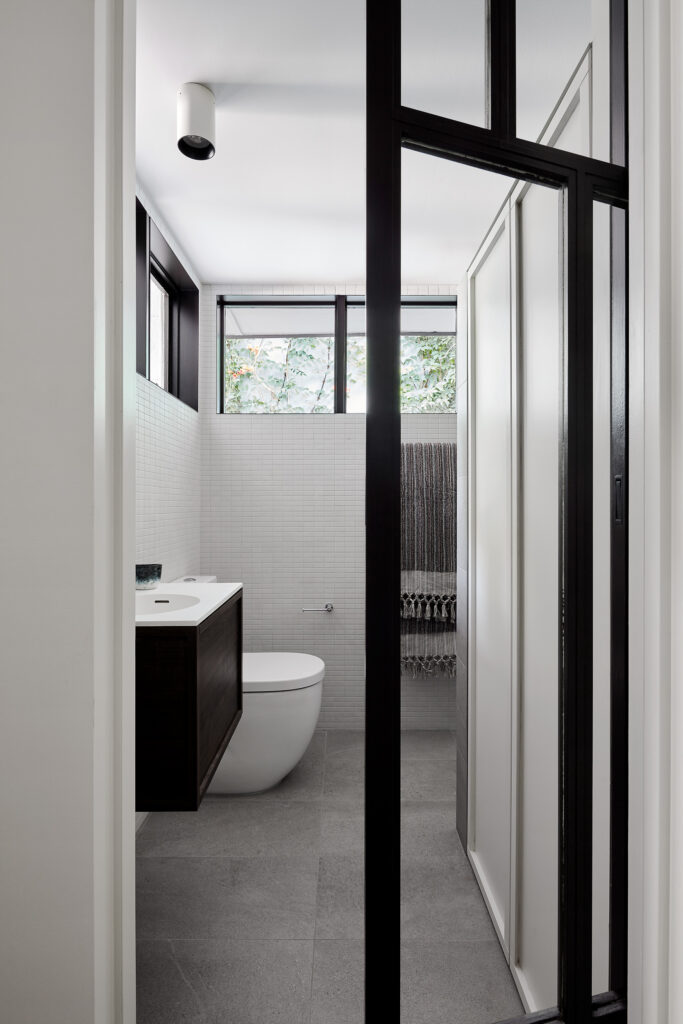
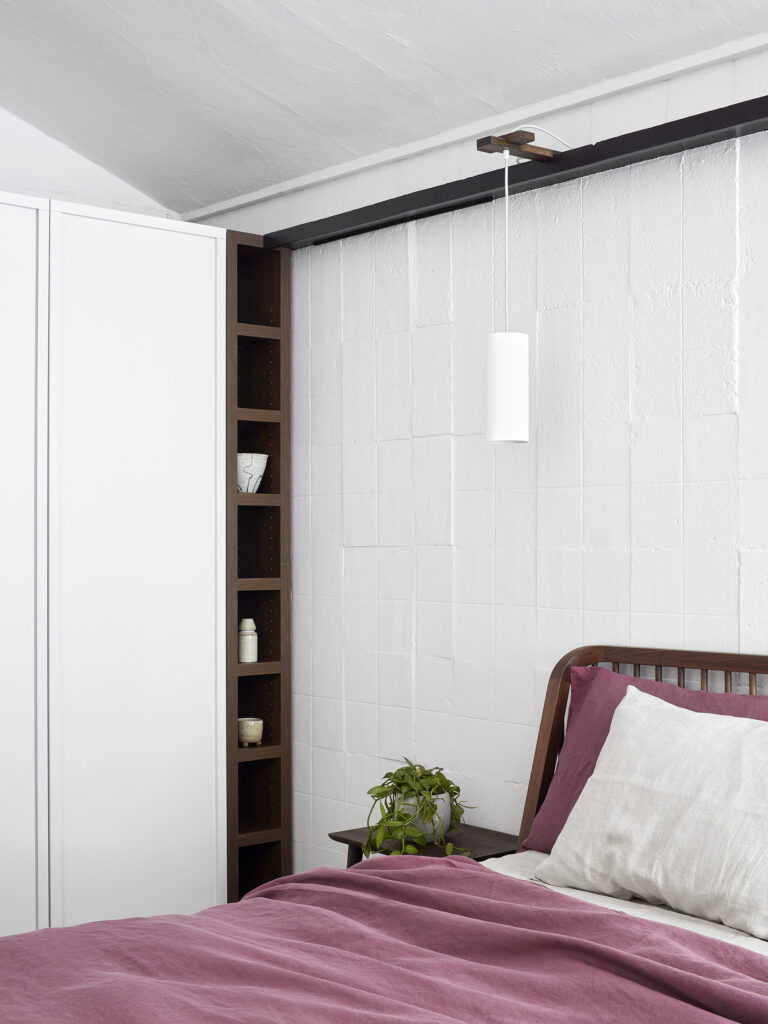
Former Salter House, Toorak
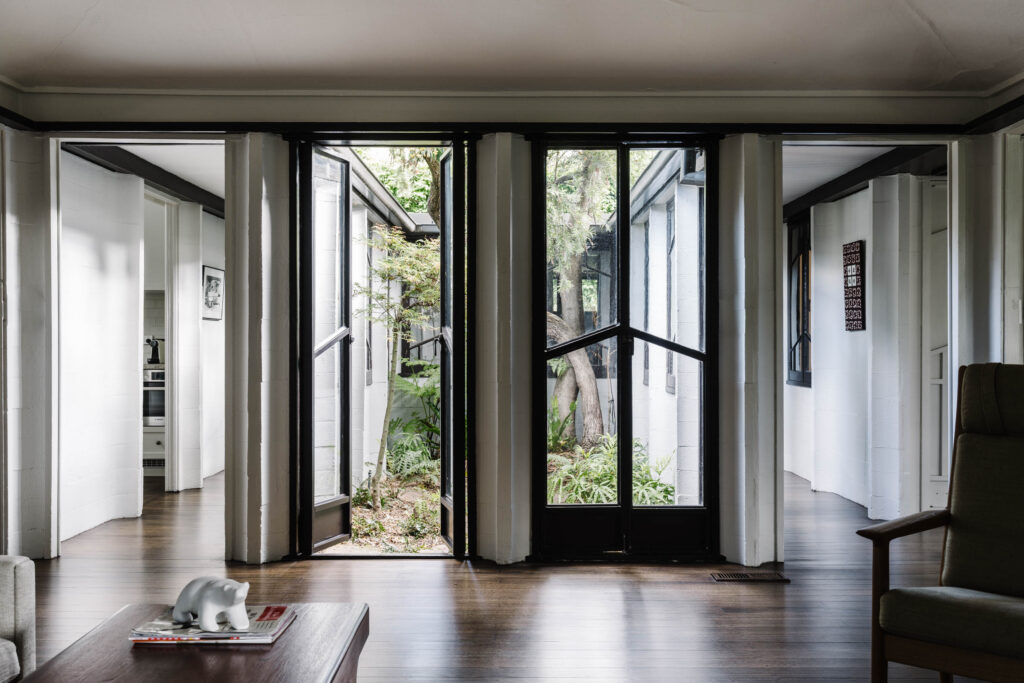
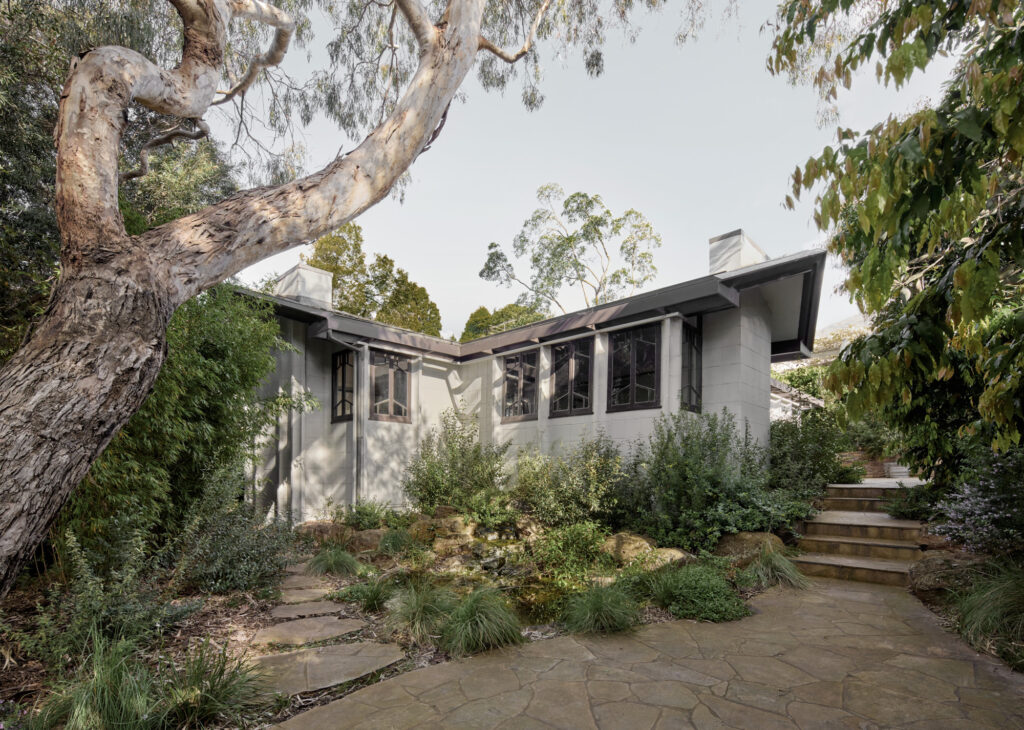
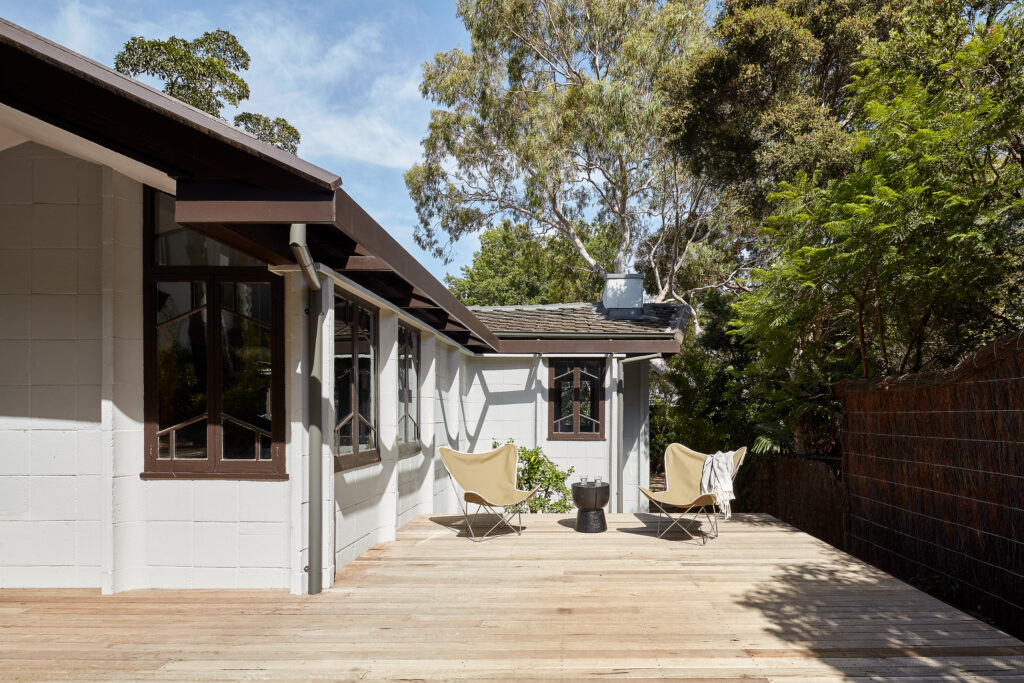
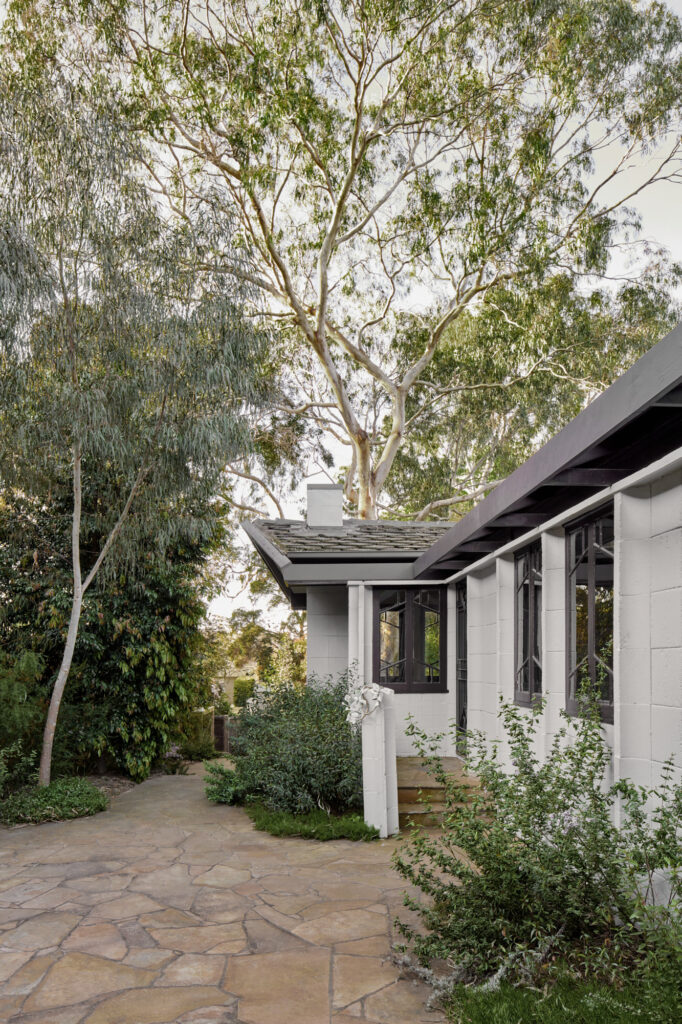
The Former Salter House (c.1920s), designed by Marion Mahony Griffin and Walter Burley Griffin, is one of Victoria’s most intact examples of the Griffin Knitlock concrete block system.
Located in Toorak under Heritage Overlay HO266 (City of Stonnington), the house is recognised by Heritage Victoria as a site of architectural and historical significance.
Identified in a Heritage Victoria case study as the most intact surviving Griffin Knitlock house in the state, the dwelling holds a pivotal place in Australian domestic architectural history.
The project focused on conservation, stabilisation, and landscape reinstatement — enabling contemporary occupation without compromising heritage significance, consistent with our broader work as a Heritage Architect in Melbourne.
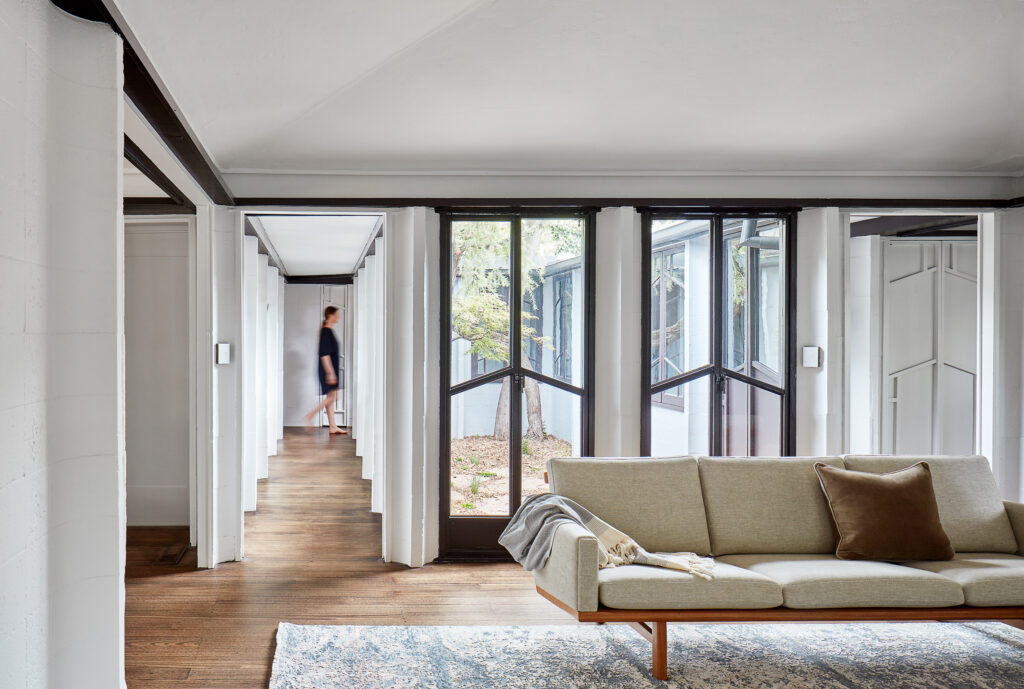
Significance Assessment
Prior to intervention, the house was assessed against:
- Architectural significance (early courtyard planning in Australia)
- Technical significance (Knitlock precast concrete block system)
- Landscape significance (integration of dwelling and bush garden setting)
- Spatial significance (integrity of original planning)
Despite incremental alterations and periods of neglect, the primary spatial order and much original fabric remained intact.
This level of integrity directly informed the conservation strategy.
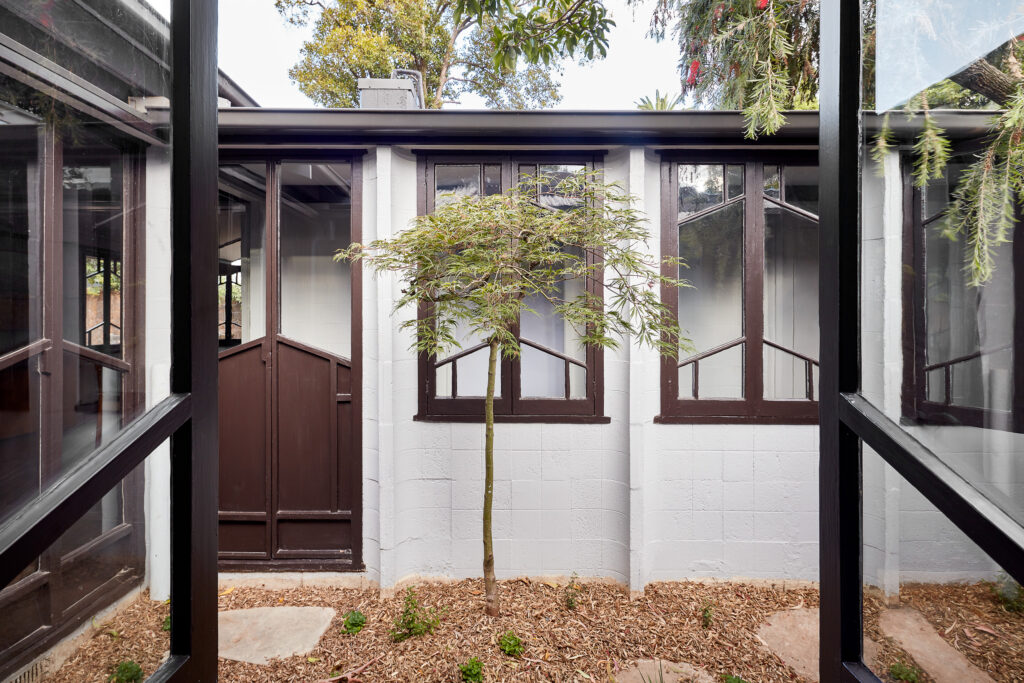
Conservation Strategy
The conservation methodology prioritised:
- Repair before replacement
- Removal of unsympathetic alterations
- Minimal intervention to significant fabric
- Integration of new services within non-heritage elements where possible
Working in collaboration with architect Christopher Hewson, all interventions were guided by physical evidence within the building rather than conjecture.
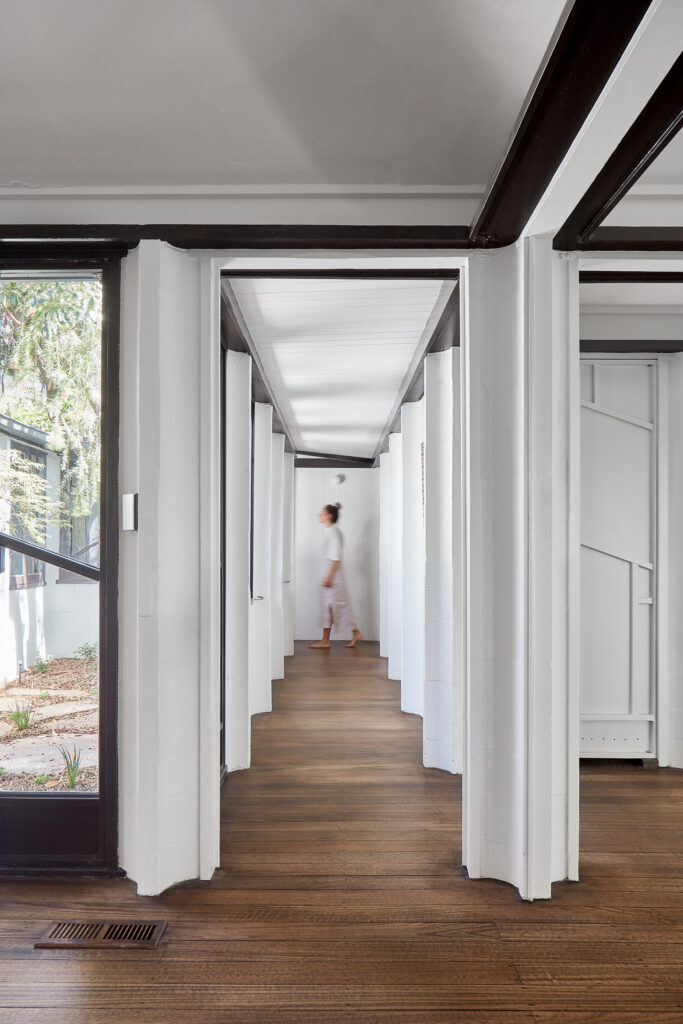
Structural instability in sections of the original fabric required carefully engineered stabilisation works. Integration of contemporary services — particularly within curved masonry — demanded bespoke detailing to avoid visual or spatial disruption.
The project demonstrates conservation as both a technical and architectural discipline — requiring investigative rigour and restraint.
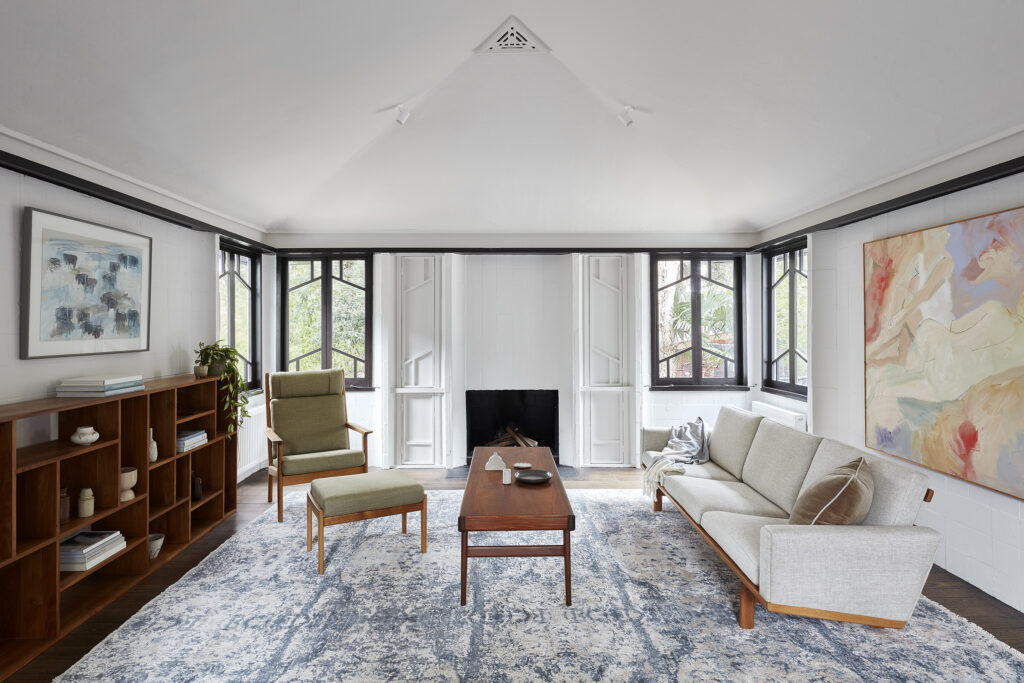
Spatial Logic and Adaptation
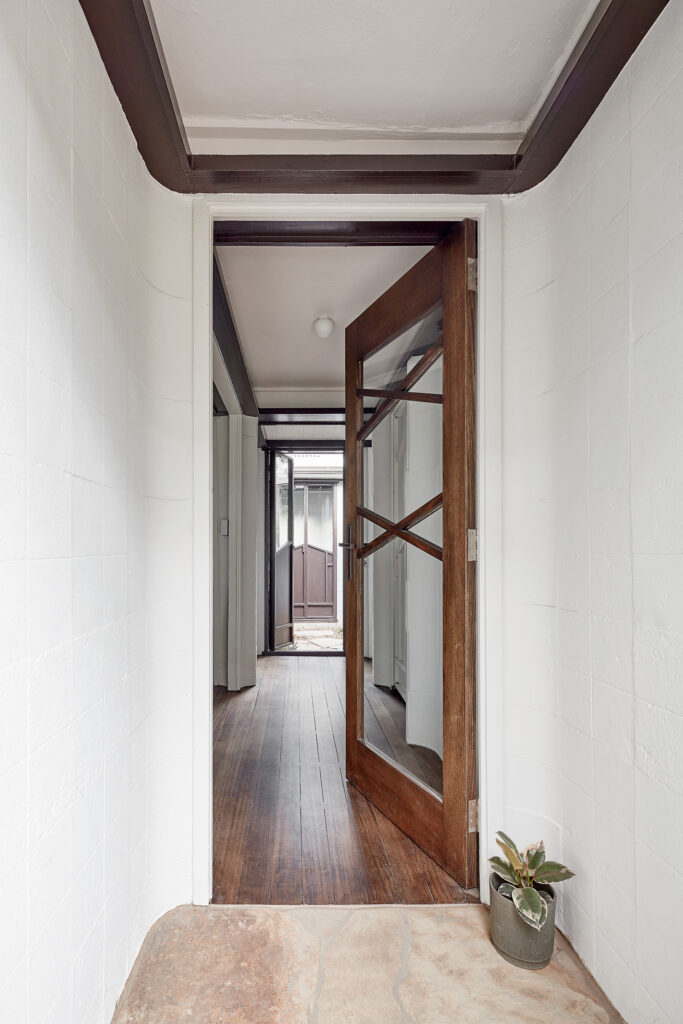
The Griffin courtyard plan proved highly resilient. The organisation of rooms around light, air, and garden allowed contemporary living to be accommodated with minimal reconfiguration.
New services were largely confined to later additions and secondary fabric. This approach preserved the clarity of the original architectural intent.
The project reinforces the durability of early climate-responsive domestic planning.
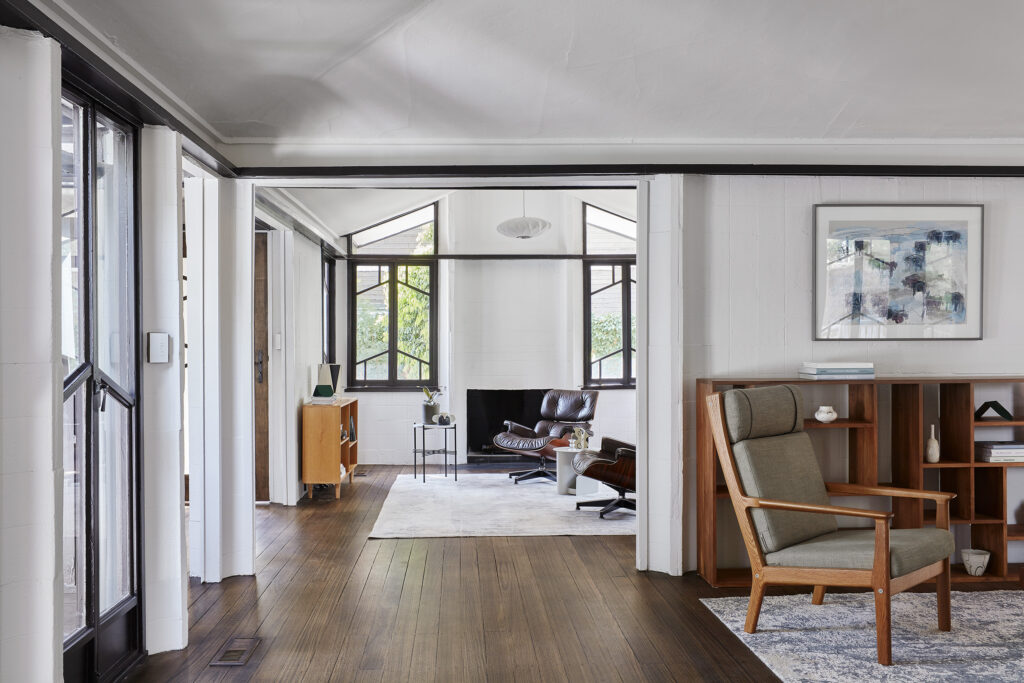
Material and Interior Approach
Interior works focused on fabric retention and reinstatement:
- Fireplaces restored to operation
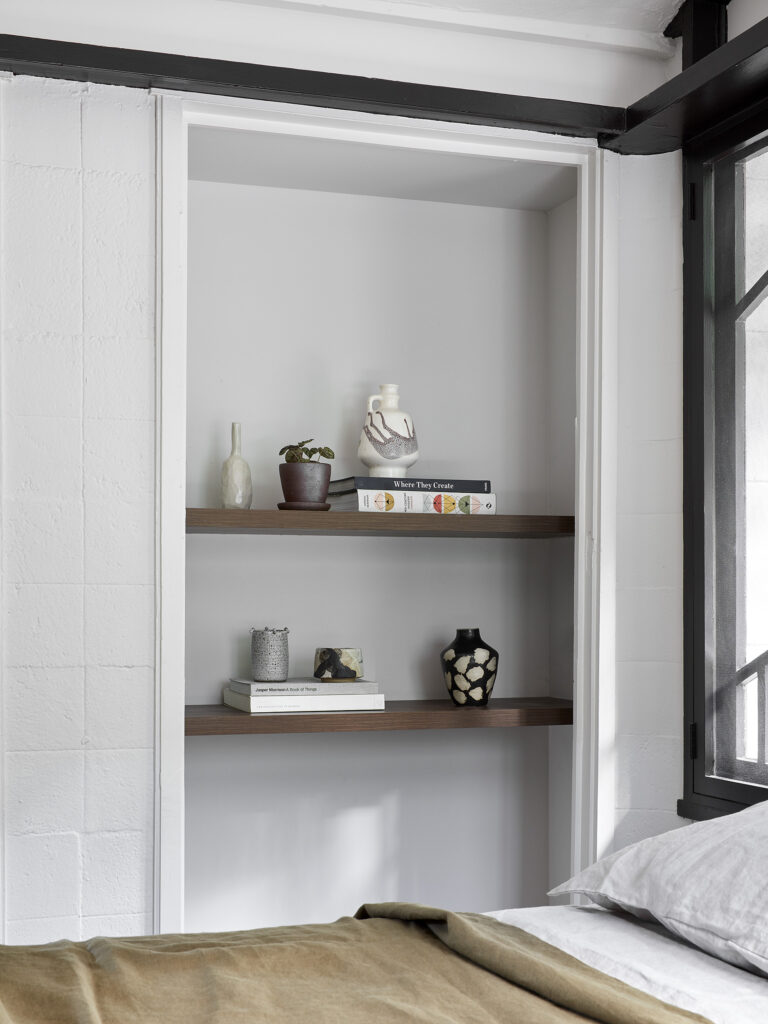
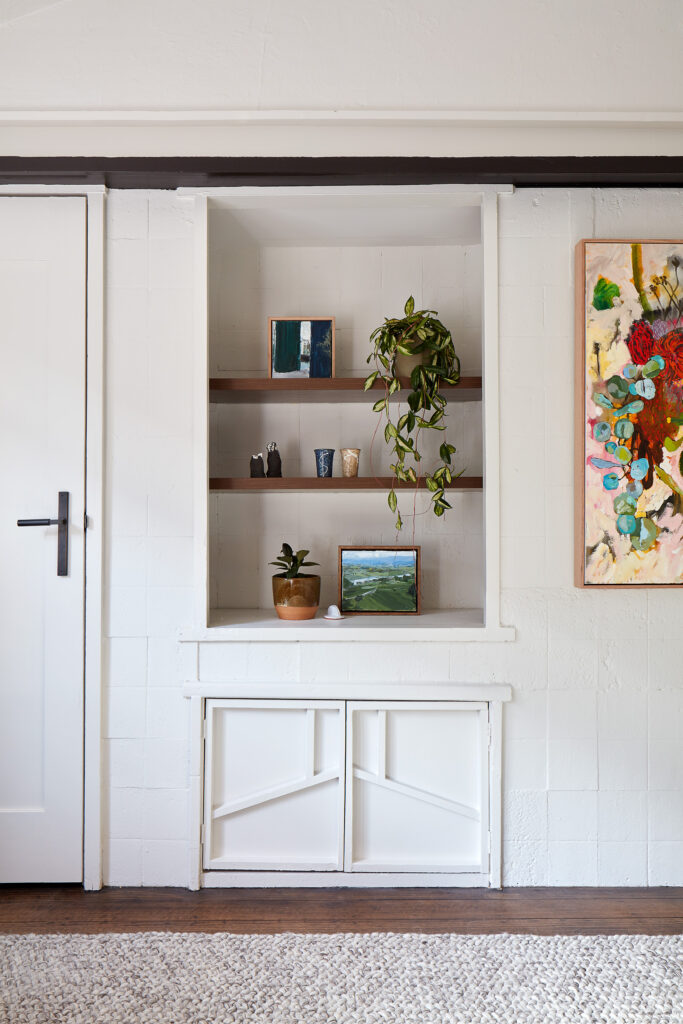
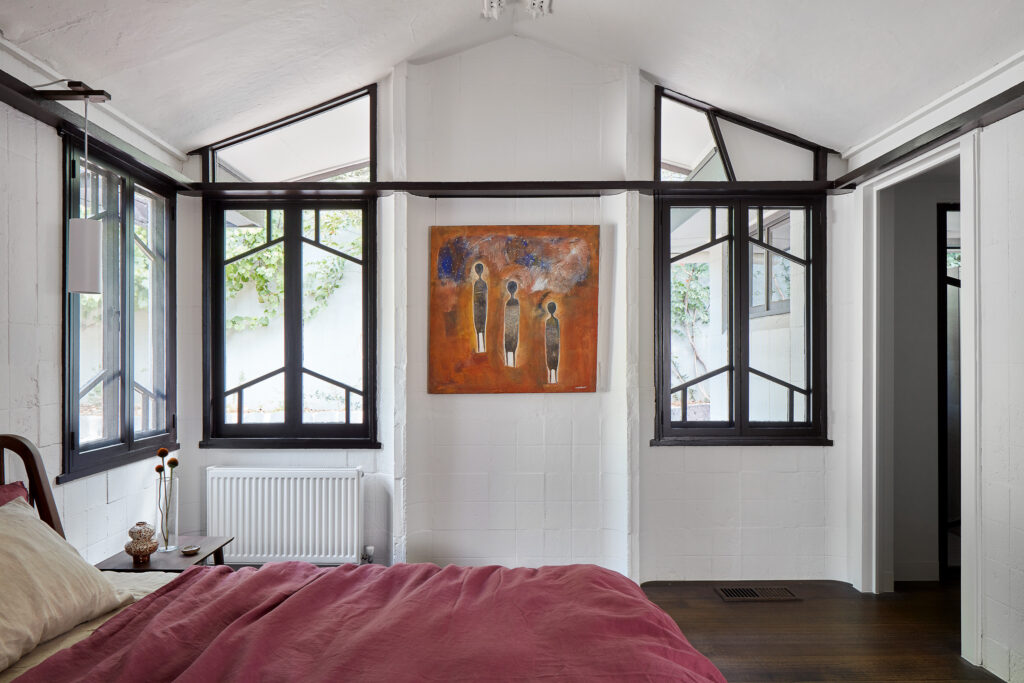
- Original joinery repaired and extended
- Timber floors refinished
- Discreet heating introduced with minimal visual impact
Colour and material selections were intentionally restrained to support continuity rather than contrast.
Landscape Restoration
The original landscape concept — embedding the house within an Australian bush setting — had been compromised over time, including the insertion of a swimming pool.
In collaboration with Sam Cox Landscape:
- The pool was repurposed as a concealed water tank
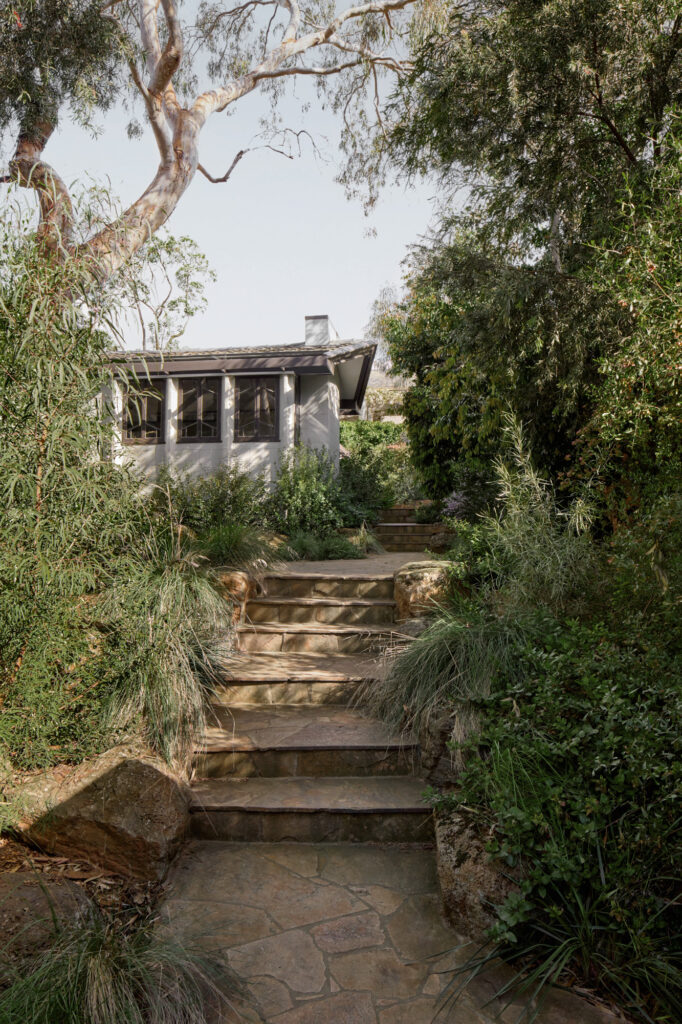
- Indigenous planting was reinstated
- Visual and ecological relationships between house and garden were restored
Landscape works were treated as integral to architectural conservation rather than decorative intervention.
Outcome
The completed works restore legibility to the Griffin design while enabling contemporary inhabitation.
The house now operates as a living heritage building — conserved, stabilised, and adapted without stylistic overlay or architectural competition.
Project Details
Period – Inter-war
Heritage Status – Individually Significant, HO266 with Incorporated Plan
Originally Built – c.1920s
Completed – 2018
Original Architects – Marion Mahony Griffin & Walter Burley Griffin
Collaborator – Architect Hewson
Builder – Enviroline
Landscaper – Sam Cox Landscape
Stylist – Orr Made
Photographers – Jack Lovel, Marnie Hawson, & Nick Doolan
Awards – Houses Awards 2019 — Shortlist, House in a Heritage Context
Broader Practice Context
This project sits alongside our Ivanhoe heritage renovation and adaptation within our broader heritage portfolio.
We frequently begin heritage projects with a Master Plan Session to clarify conservation priorities, statutory constraints, and long-term strategy before design intervention.