
Former Beddison Swift House, Ivanhoe
Ivanhoe House is a careful unification of two mid-century modern dwellings designed in 1963 by architects Neil Clerehan and Guilford Bell.
The project brings the formerly independent residences into a single, continuous home while preserving the spatial clarity, material restraint, and cultural significance of the original architecture.

Adaptive Reuse and the Quiet Evolution of a Mid-Century Modern Legacy
Architectural conservation is most often associated with nineteenth-century buildings, where age alone confers cultural authority. Mid-century modern architecture occupies a more ambiguous terrain — recent enough to feel familiar, yet significant enough to demand careful stewardship.
Designed in the early 1960s by architects Neil Clerehan and Guilford Bell, the Ivanhoe dwellings sit precisely within this threshold. Conceived as two interconnected yet independent homes for multigenerational living, they represent an early and refined exploration of shared domestic occupation in Australia.
For more than half a century the houses remained with a single family, allowing their spatial clarity and restrained material language to endure with unusual integrity. When new custodians acquired the property, the question was not how to transform it, but how to continue its evolution without erasing its intent.
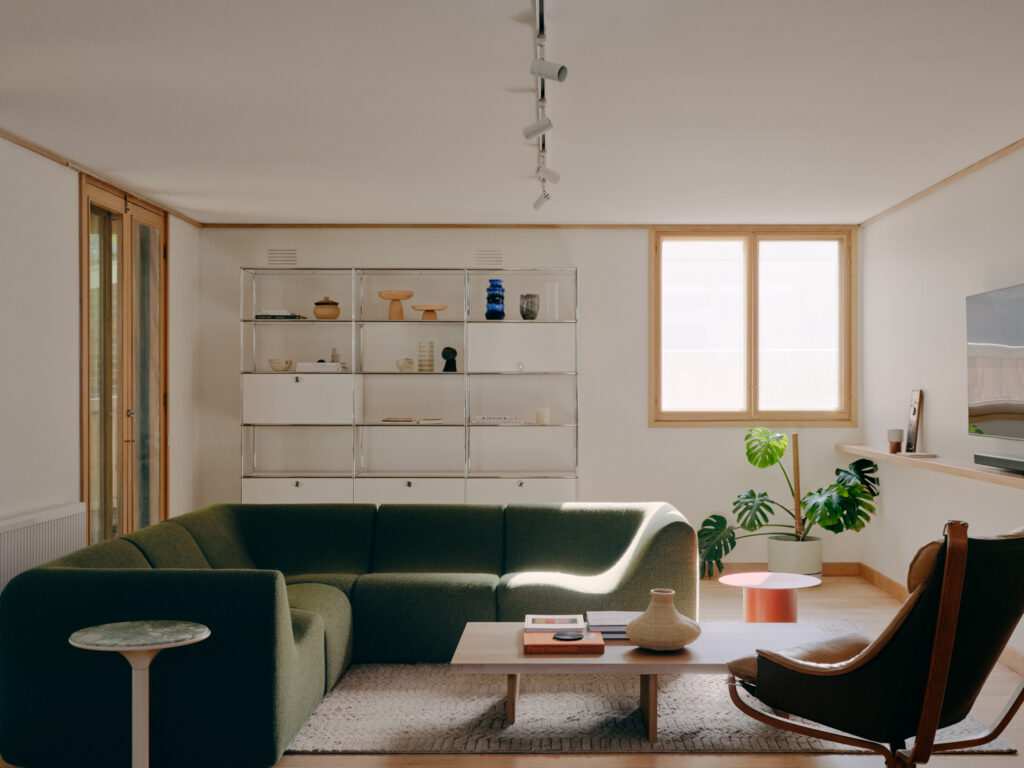
Reading Before Intervening
Clerehan and Bell’s scheme reveals a disciplined synthesis of proportion, restrained material expression, sectional sequencing, and landscape integration. Although composed as two dwellings — a street-facing residence and a larger two-storey home to the rear — the ensemble already possessed a quiet architectural unity grounded in the robustness of the original planning.
Rather than imposing contemporary expectations, the project began with a quieter enquiry: what within the existing architecture could already sustain present-day life?
In many respects, the answer was most of it.
An early Master Plan clarified that the project’s strength lay not in transformation, but in measured continuity — where small, precise interventions could unify the dwellings while preserving their architectural intelligence.
The Master Plan did not invent a new idea; it revealed the one already embedded within the building.
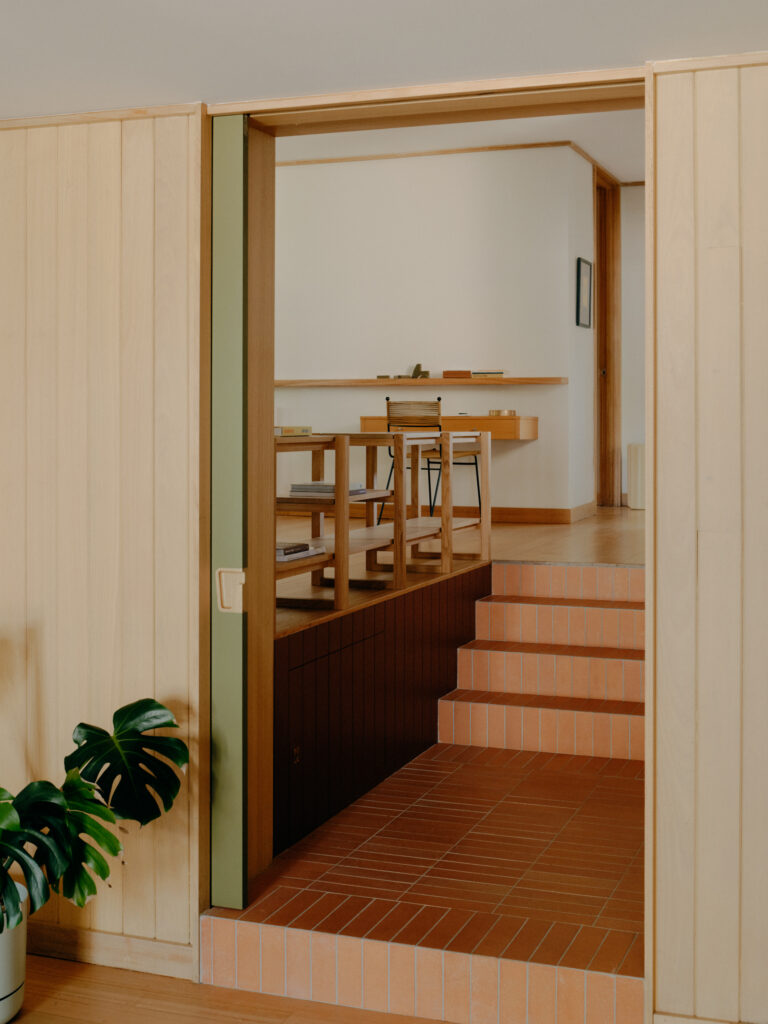

Continuity Rather Than Change
A commitment to retain the essential floor plan ensured intervention remained fundamentally non-invasive.
This constraint became the project’s generative force.
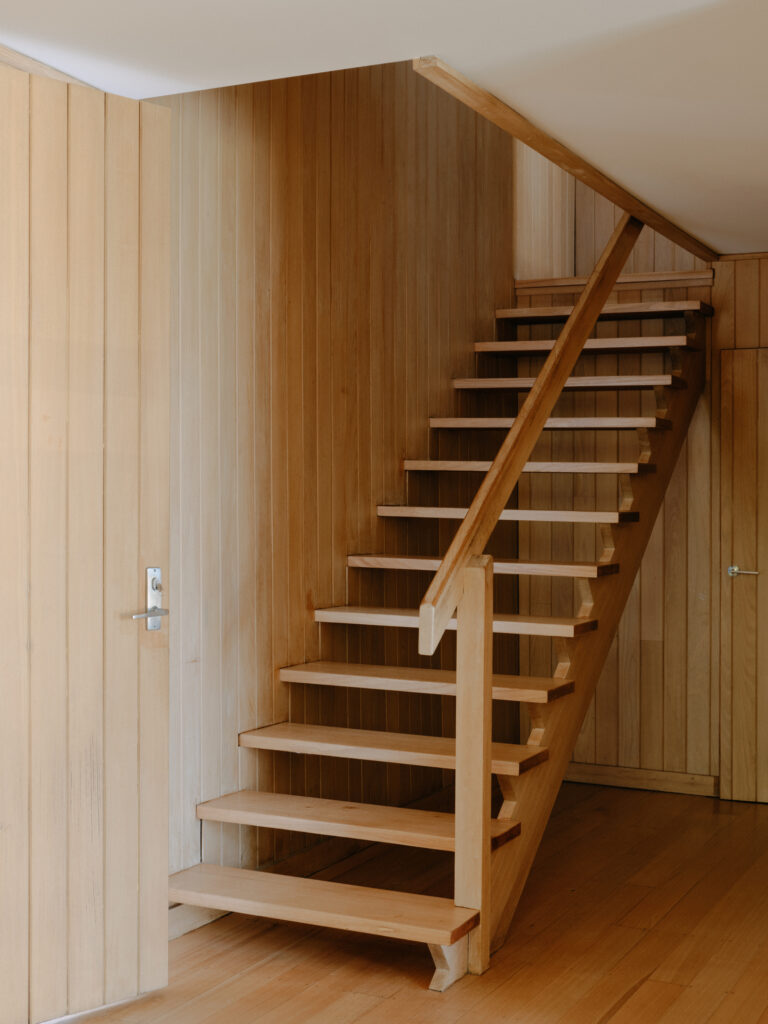
Clerehan and Bell’s staggered levels — subtly interconnected from the outset — allowed a minimal gesture to unify the dwellings: a short sequence of steps transforming separation into continuity.
Here, conservation operates through calibration rather than replacement, where meaningful architectural change is measured in centimetres rather than metres.
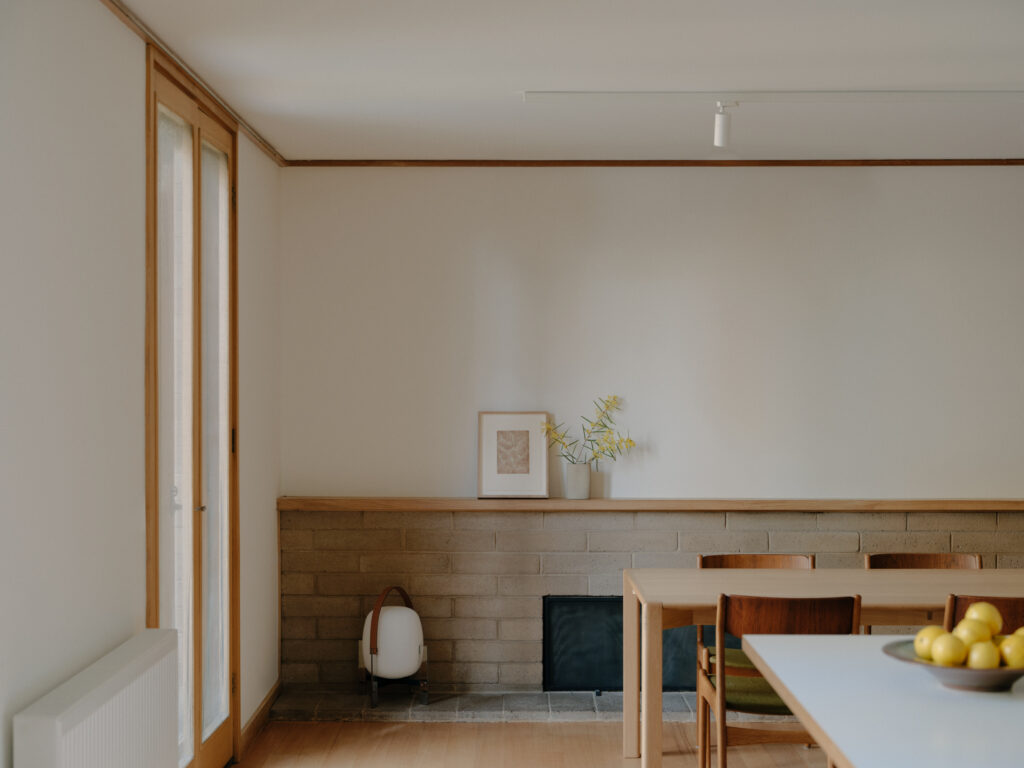
Re-ordering Domestic Life
Within the largely intact spatial framework, selective internal adjustments support contemporary inhabitation.
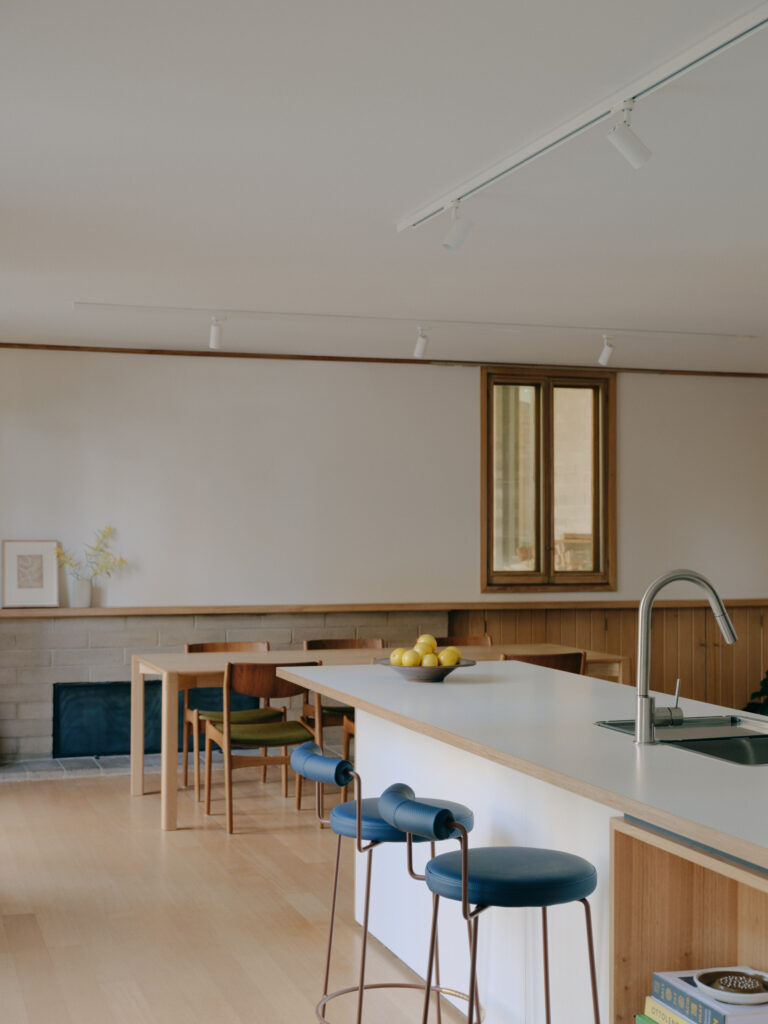
Removing the original kitchen and a partition wall in the front residence opened living, dining, and kitchen into a single continuous volume. The former living space of the rear dwelling became a dedicated dining room adjoining an expanded kitchen suited to everyday family life.
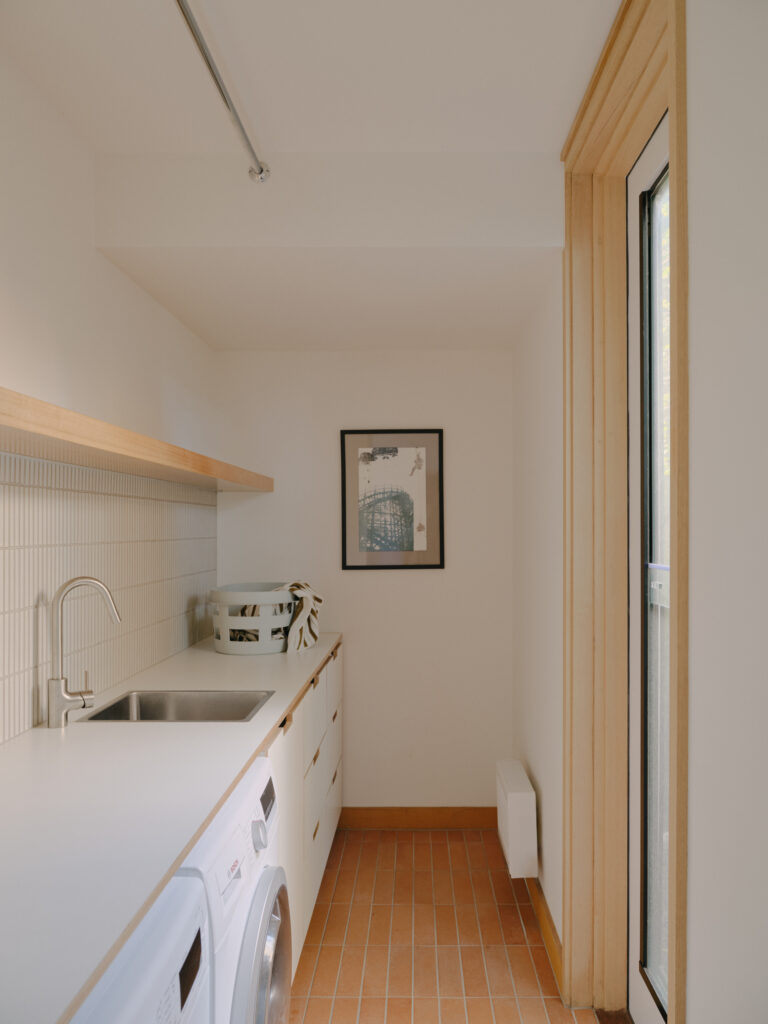
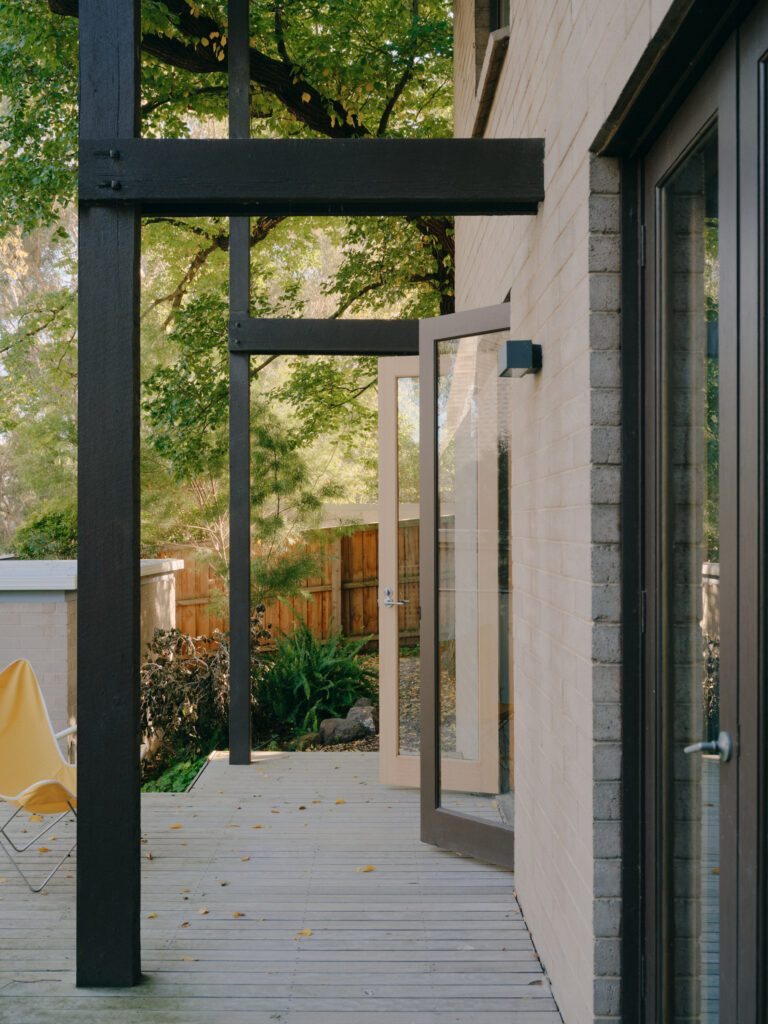
Laundry and powder room were reconfigured with comparable restraint, while a modest rear deck extends living toward the garden — reinforcing an interior–landscape dialogue already present in the original design.
None of these moves seeks visual emphasis. Instead, they recalibrate space quietly, allowing the architecture to feel both familiar and renewed.
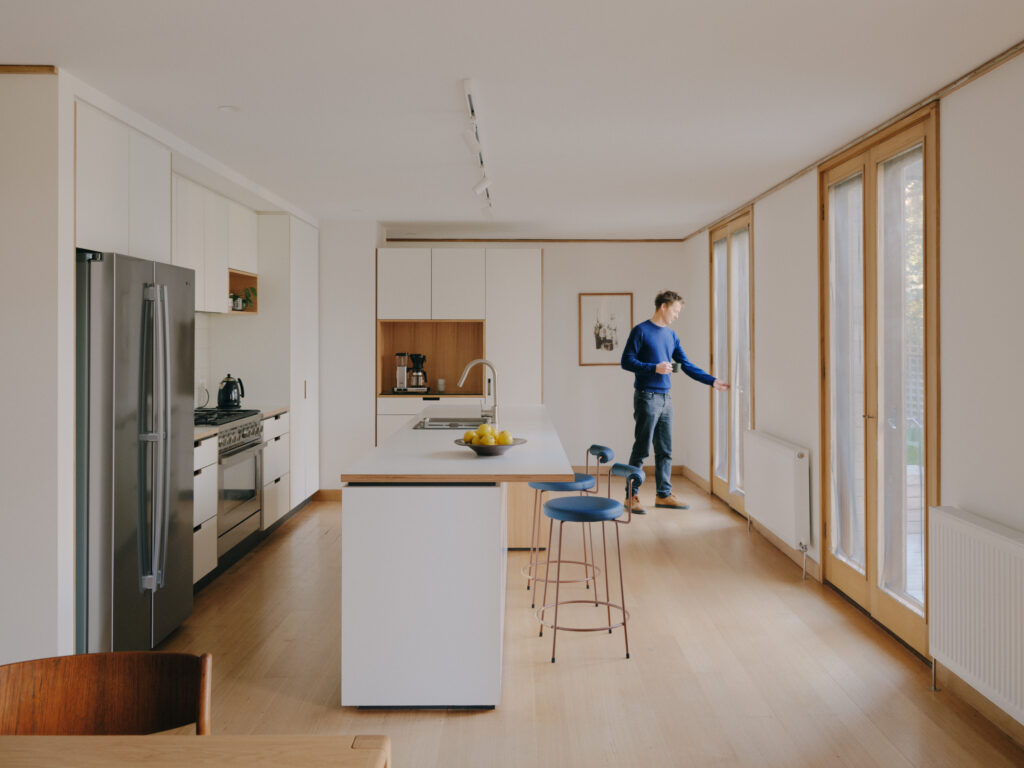
Material Memory
At Ivanhoe, continuity is carried through decisions that appear minor yet hold deep consequence:
- original Tasmanian Oak flooring refinished rather than replaced
- existing joinery and bookshelves retained and repurposed
- a restrained palette aligned with mid-century modern simplicity
- contemporary insertions introduced only where function required
Heritage value resides here not only in structure or form, but in texture, proportion, and atmosphere.
The interior neither reconstructs the 1960s nor overwrites it. Past and present remain legible in quiet simultaneity.
Reuse as Environmental Ethic
Retaining the existing structure preserves embodied carbon and avoids the emissions associated with demolition and rebuilding. Cultural continuity, spatial adaptability, and environmental responsibility align through reuse rather than technological display.
Sustainability, in this sense, is achieved through restraint.

Collaboration
Realised in collaboration with Architect Hewson and supported by skilled consultants and makers, the project is defined by shared commitments:
- restraint over expression
- repair over replacement
- continuity over novelty
Such alignment is largely invisible, yet fundamental to the work’s integrity.
An Evolving House
Following completion, the transformation reads less as redesign than as release.
The house is now spatially continuous, materially coherent, open to light and landscape, and adaptable to contemporary family life.
Most importantly, the project demonstrates that mid-century modern architecture can evolve without losing its intellectual or cultural ground.
Adaptive reuse becomes not preservation alone, but continuity across generations.
Recognition
Shortlisted in two categories at the 2024 Houses Awards, the project received a Commendation for House in a Heritage Context, recognising the clarity and restraint of its adaptive reuse strategy.
Project Details
Suburb – Ivanhoe
Period – Mid-Century Modern
Heritage Status – Individually Significant, HO207
Originally Built – 1963
Completed – 2021
Original Architects – Guilford Bell and Neil Clerehan
Collaborator – Architect Hewson
Builder – Enviroline
Loose Furniture – Billie Roy
Stylist – Without Studio
Photographer – Tom Ross
Awards – 2024 Houses Awards — Commendation, House in a Heritage Context; Shortlisted, House Alteration & Addition under 200 m²
Continuity Through Adaptation
At Ivanhoe, the task was not restoration but measured evolution.
Clerehan and Bell’s architecture already contained the generosity required for contemporary life; the work lay in revealing it.
Together with the conservation work at Toorak and the deep environmental retrofit at Fitzroy, the project suggests a broader proposition:
The future of existing housing lies not in replacement, but in careful transformation across time.
We welcome conversations with homeowners considering the renewal of mid-century modern or existing houses in Melbourne — often beginning with a calm and informed Master Plan that explores how careful adaptation can support contemporary living while retaining architectural character.