Fitzroy Passivhaus Classic Plus Certified Retrofit
Fitzroy House is a 1950s heritage terrace renovation in Melbourne’s inner north, certified to the Passivhaus Classic Plus standard through a deep retrofit and selective reconstruction.
The project demonstrates how ultra-low-energy design, material reuse, and streetscape continuity can coexist within a compact inner-city dwelling.
Deep Retrofit, Heritage Continuity, and Ultra-Low-Energy Living
Within Melbourne’s inner north — where dense streetscapes and ageing terraces define the urban fabric — the future of sustainable living is increasingly shaped not by replacement, but by the careful transformation of what already exists.
Fitzroy House explores this condition through renovation, extension, and deep retrofit, achieving the rigorous Passivhaus Classic Plus certification. More than a technical exercise, the project considers how heritage continuity, material stewardship, and contemporary comfort can coexist within a compact terrace.
Here, environmental performance is not applied after the fact.
It becomes the organising principle through which architecture, construction, and daily life are reconsidered together.
A Quieter Home Within the City
The client purchased the house with the clear intention of undertaking a comprehensive renovation that would allow them to remain embedded in neighbourhood life while achieving greater calm, comfort, and climatic resilience.
The clients had an established life in Fitzroy and purchased the terrace with the clear intention of renovating and making it their long-term home.
The project therefore reimagines an existing dwelling from within the same neighbourhood context — demonstrating how deep retrofit can support enduring urban living while strengthening cultural and social continuity.
From the outset, thermal stability, acoustic quietness, and long-term environmental performance became primary architectural drivers.
Beginning with Strategy
The project began with a Master Plan, allowing planning controls, heritage obligations, and performance ambitions to be tested before design resolution.
Following engagement for full architectural services, a collaborative on-site review with builder Hone Built provided a critical second reading of the existing structure, clarifying the appropriate extent of deconstruction and confirming a viable pathway toward certification-level performance.
Architecture here emerged through sequencing and calibration rather than predetermined form.
Heritage Continuity Through Selective Reconstruction
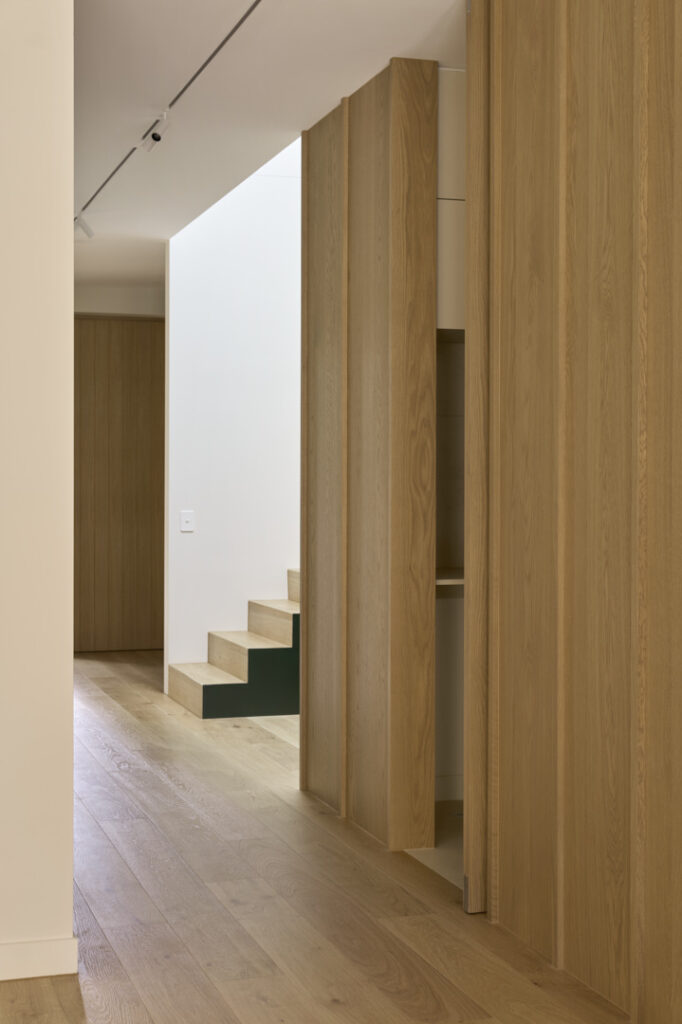
The dwelling forms part of a 1950s Housing Commission terrace within the St Lawrence Housing Estate — modest in scale yet integral to the rhythm of the street.
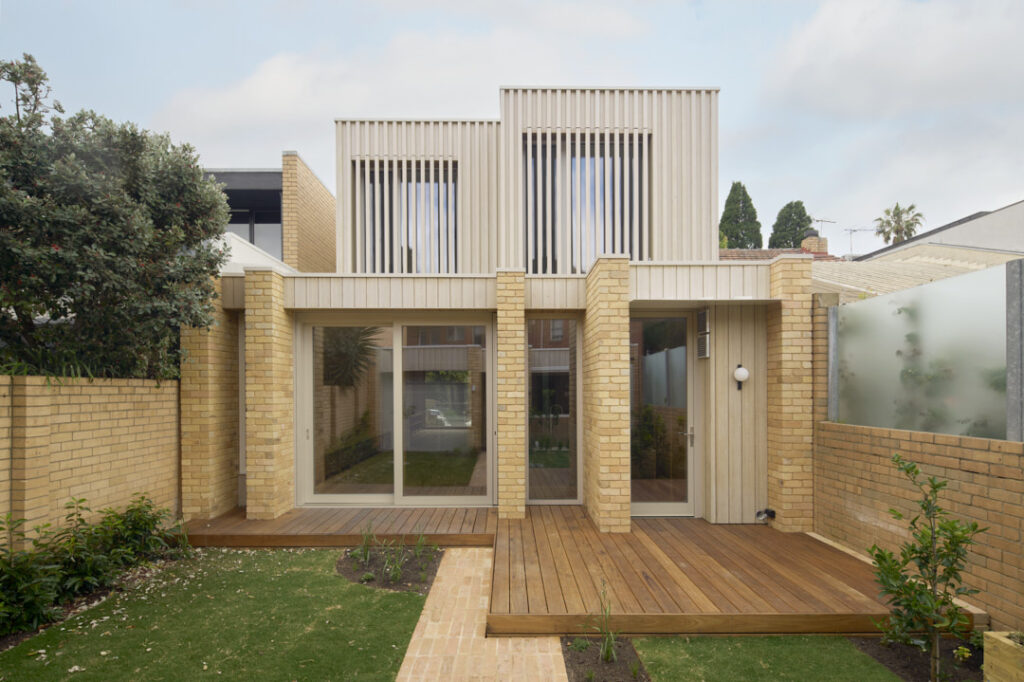
To balance conservation with environmental ambition, the street façade and party-wall condition were retained, preserving the public identity of the terrace. Behind this familiar frontage, compromised fabric was carefully dismantled and rebuilt to support a high-performance envelope.
This strategy enabled:
- continuity of streetscape character
- substantial reduction in operational energy demand
- retention and reuse of original materials to reduce embodied carbon
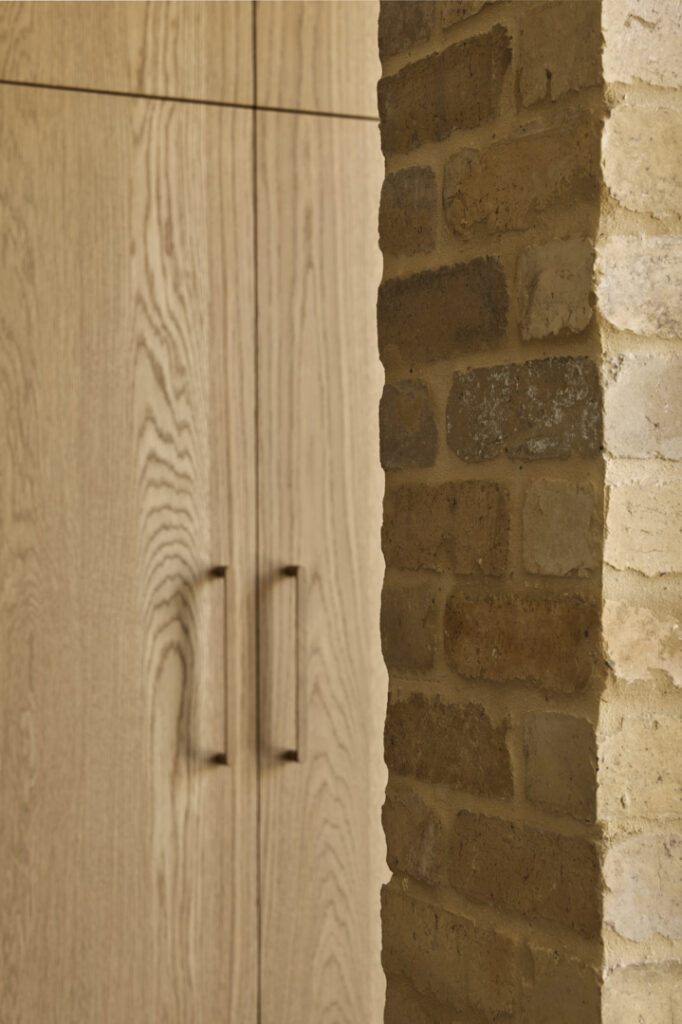
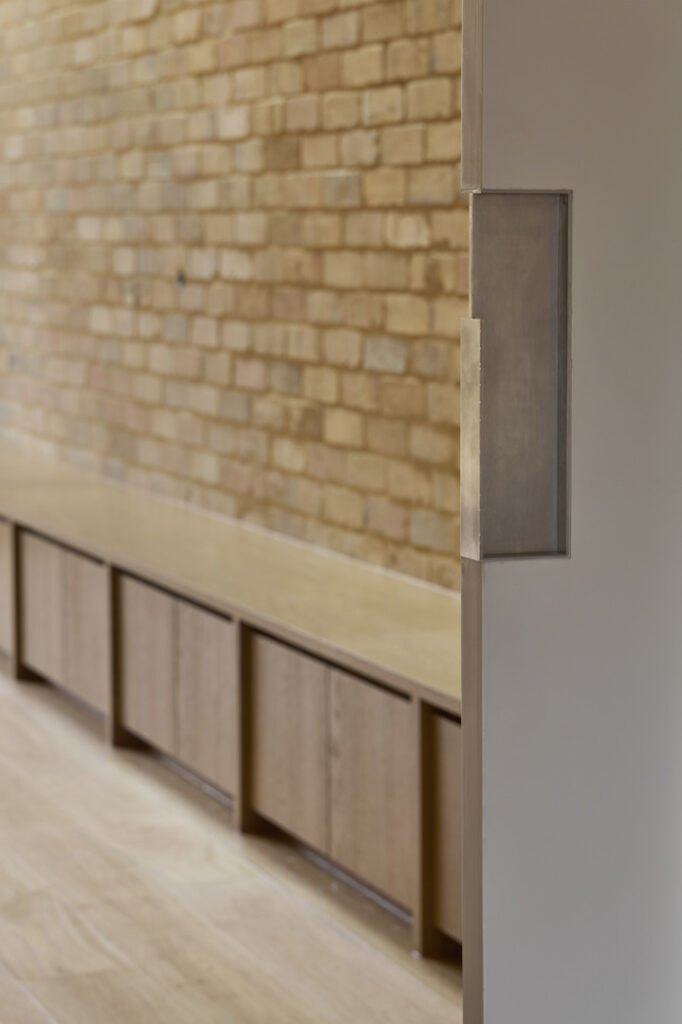
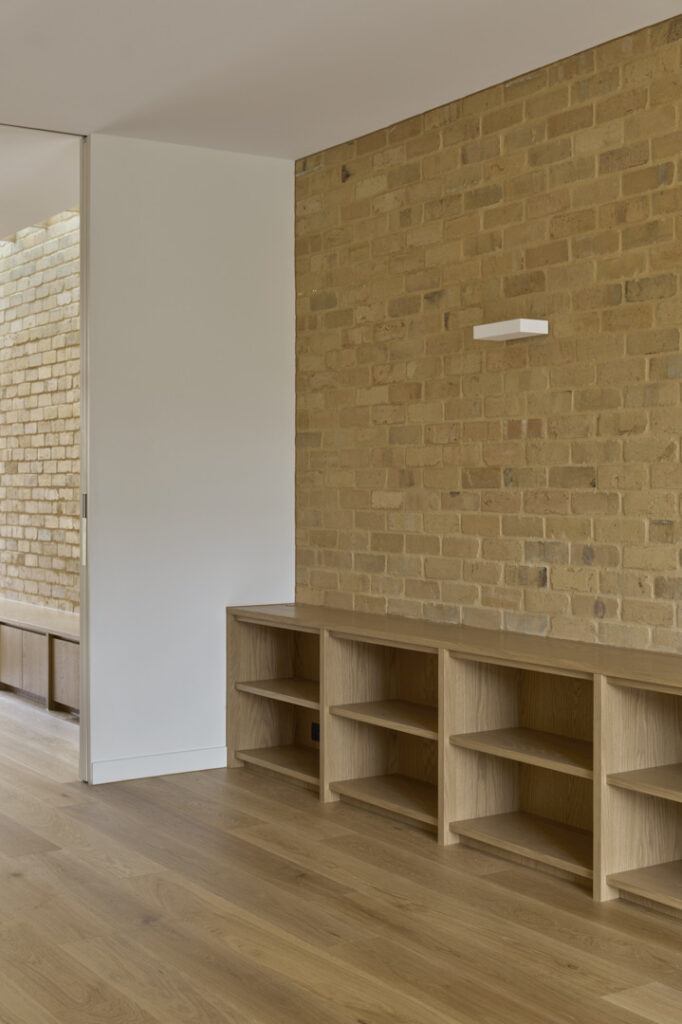
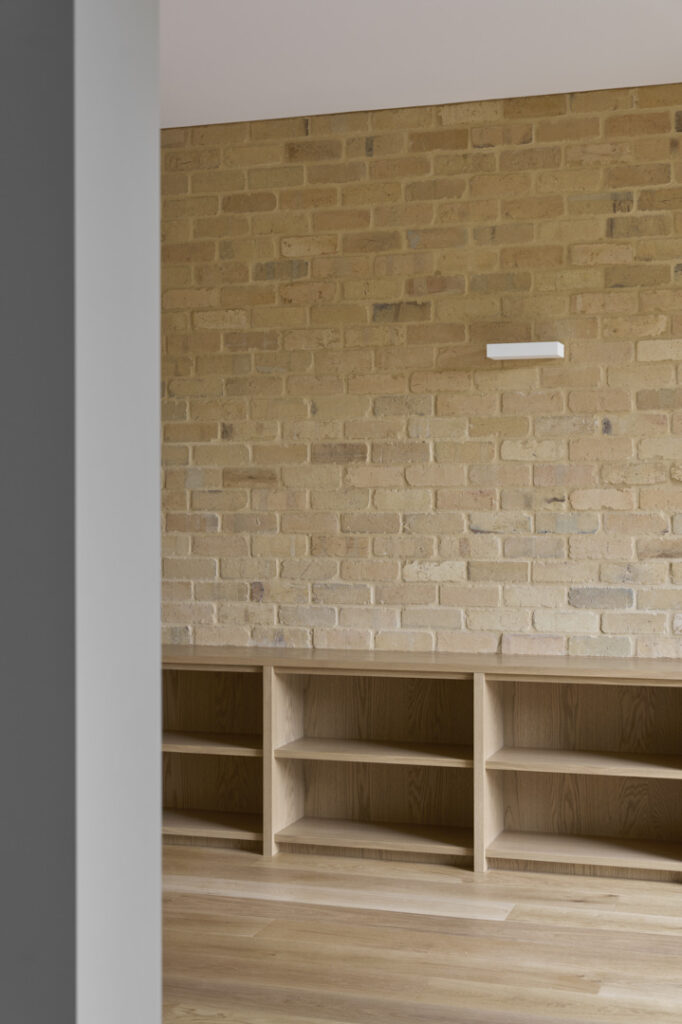
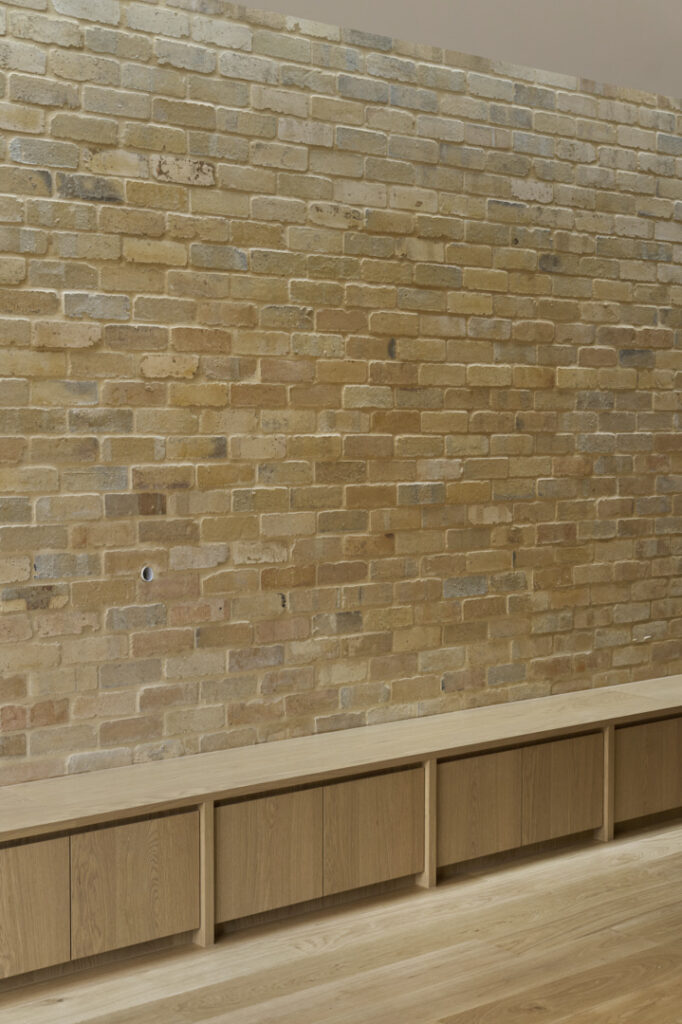
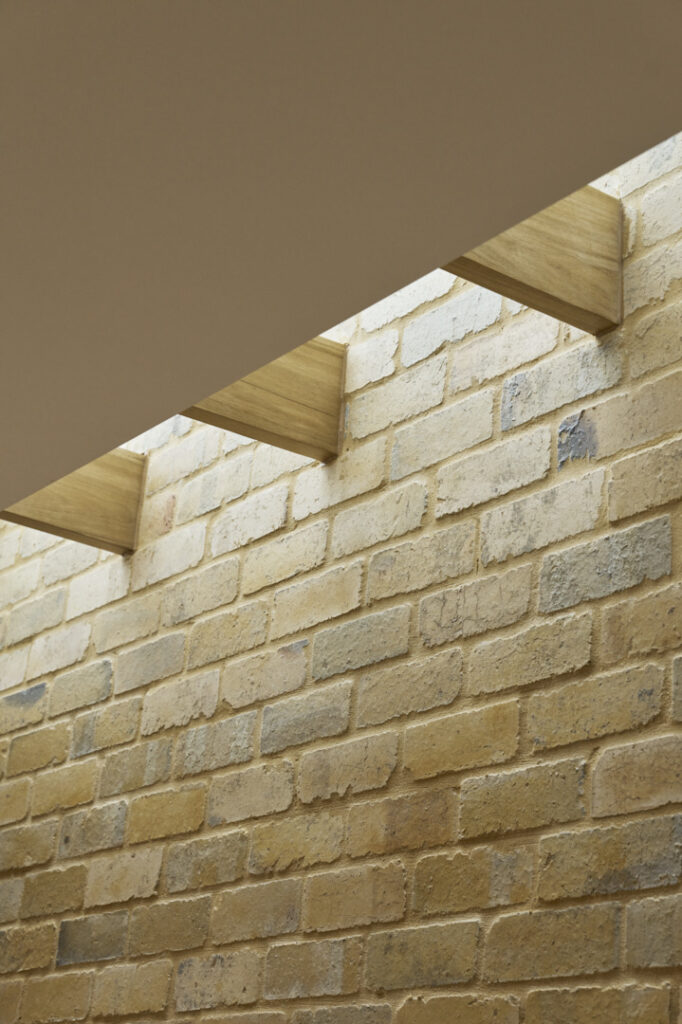
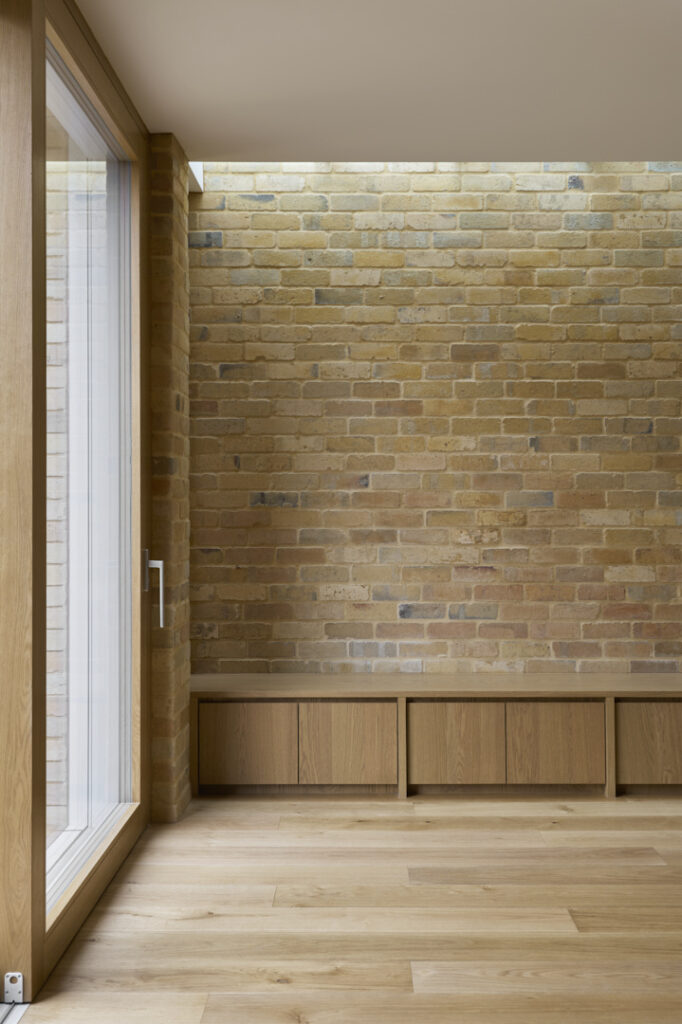
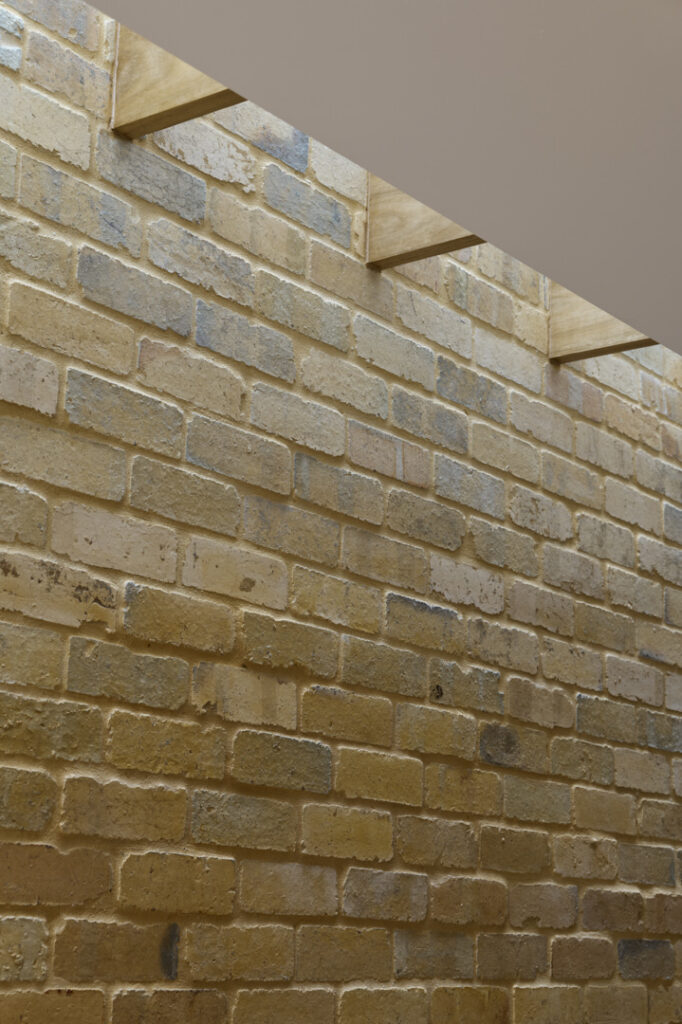
Salvaged bricks and roof tiles reappear within the renewed architecture, allowing material memory to persist within transformation.
Architecture Shaped by Performance
Achieving Passivhaus Classic Plus within an urban terrace demands exceptional coordination between heritage, structure, and environmental design.
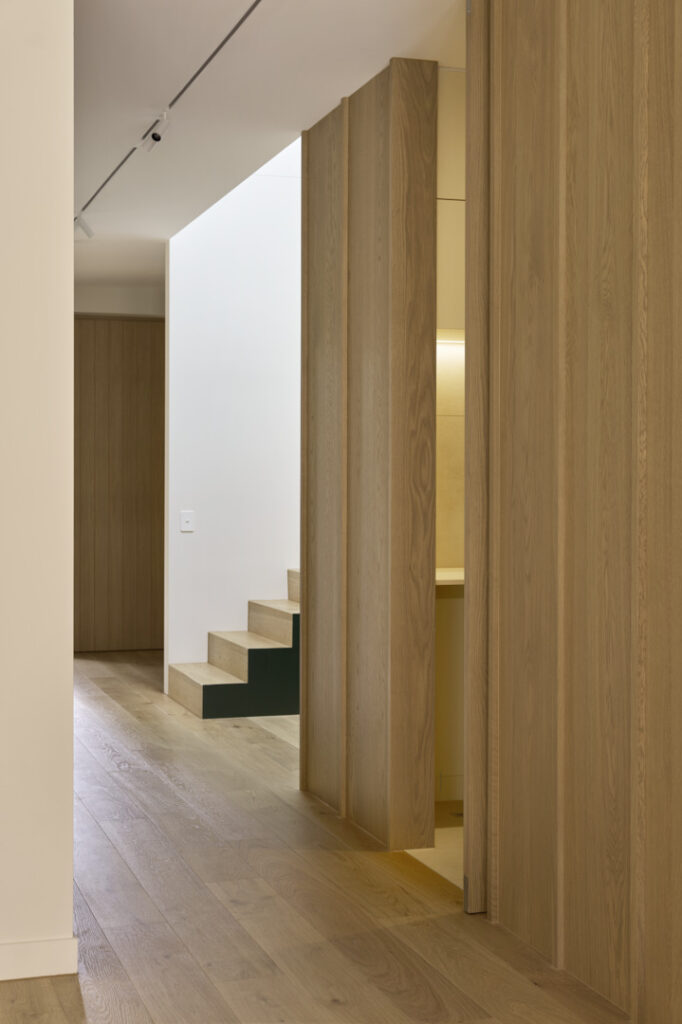
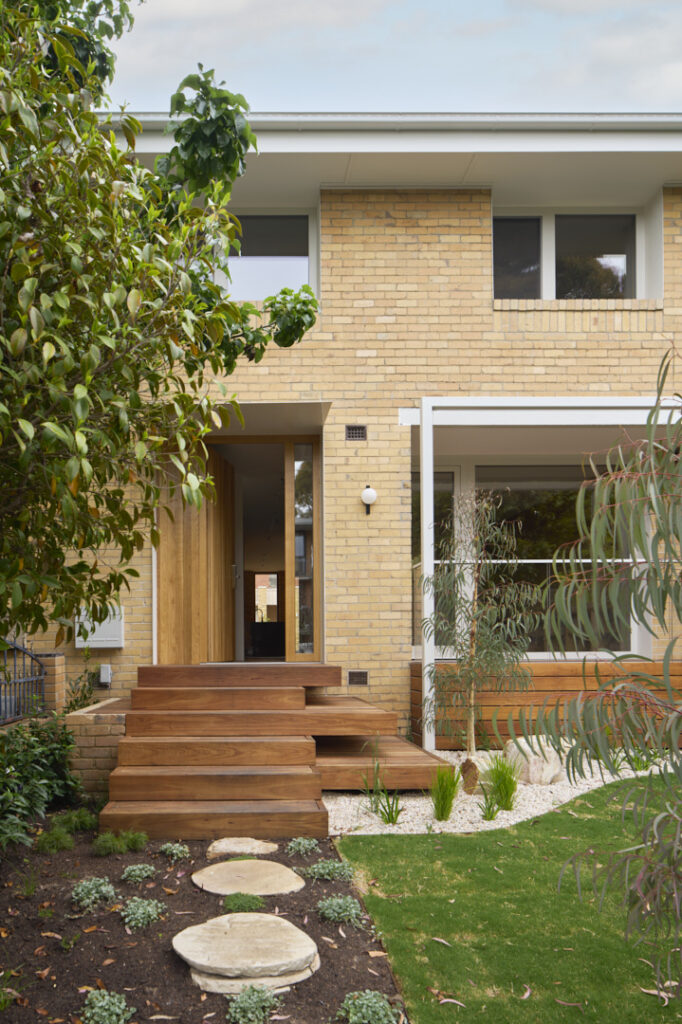
Rather than expressing performance through visible technology, the project embeds it quietly within the building fabric — shaping proportions, openings, junctions, and construction sequencing.
The resulting architecture is deliberately calm: thermally stable, acoustically protected, and materially restrained.
Windows operate as finely tuned environmental interfaces. Ventilation is continuous yet imperceptible. Airtightness and insulation remain unseen, but deeply felt.
Performance becomes spatial experience rather than technical display.
Light, Material, and Atmosphere
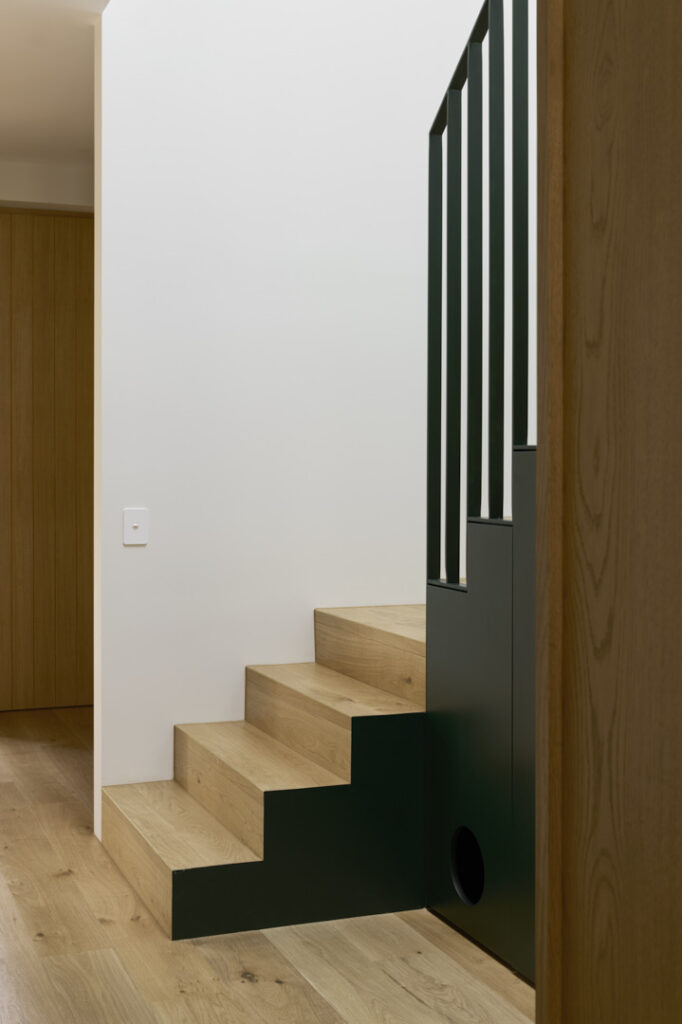
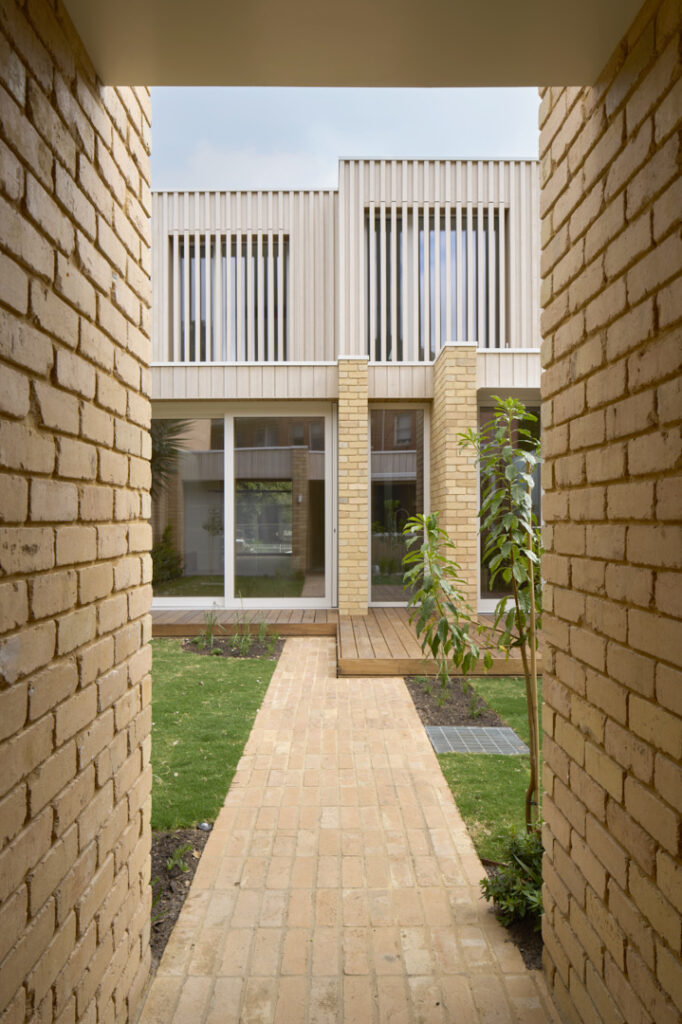
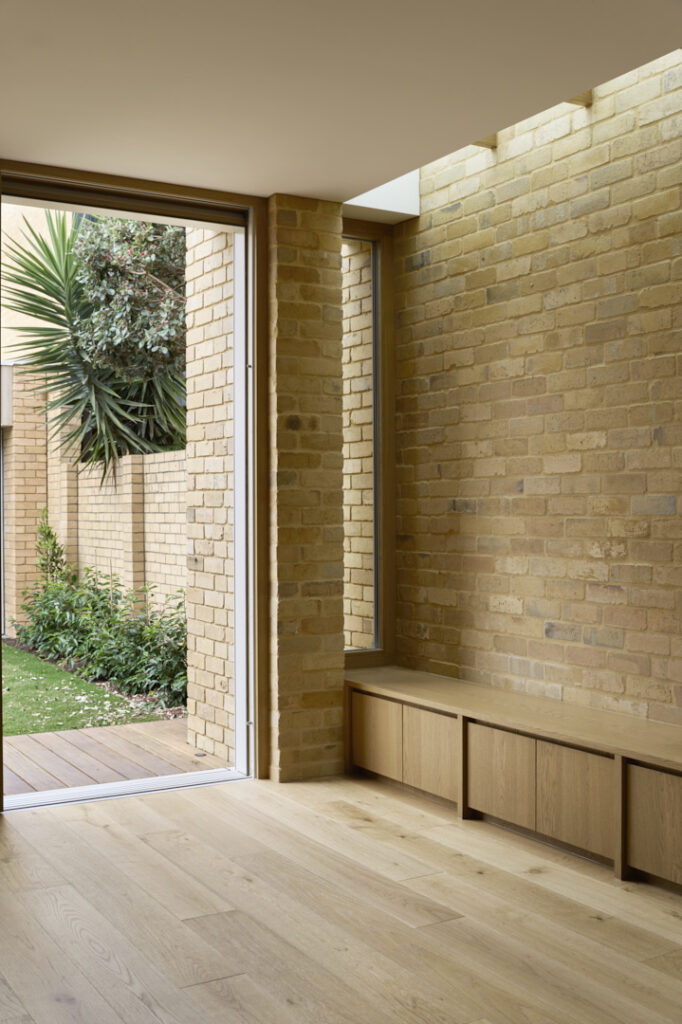
Within the compact plan, controlled daylight shapes interior life. A linear skylight draws soft light deep into the dwelling, reinforcing spatial clarity while maintaining privacy from neighbouring properties.
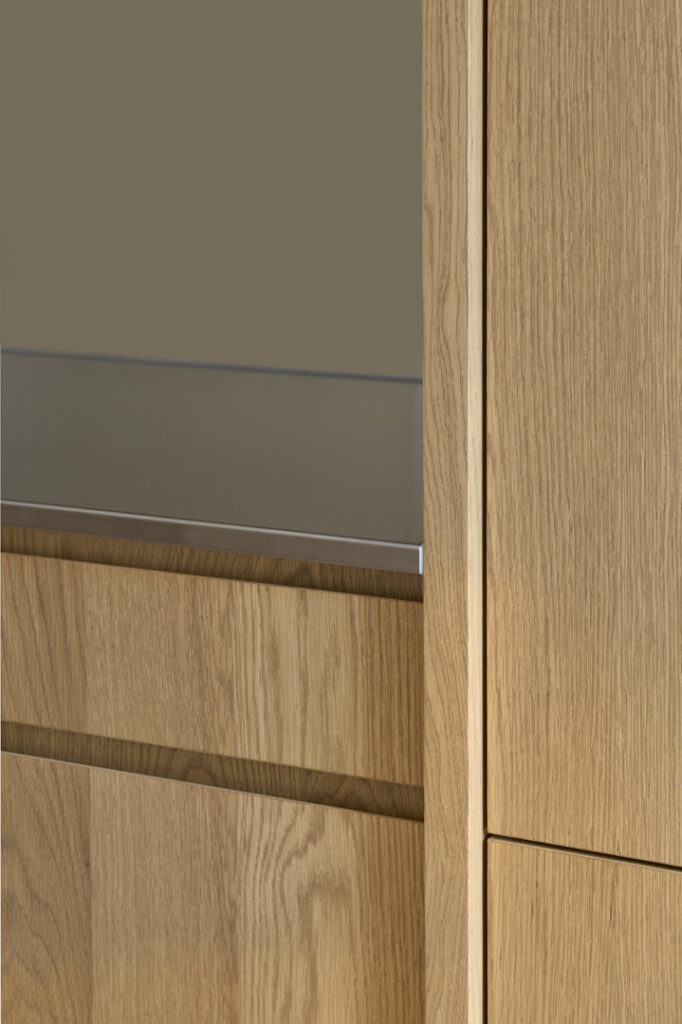
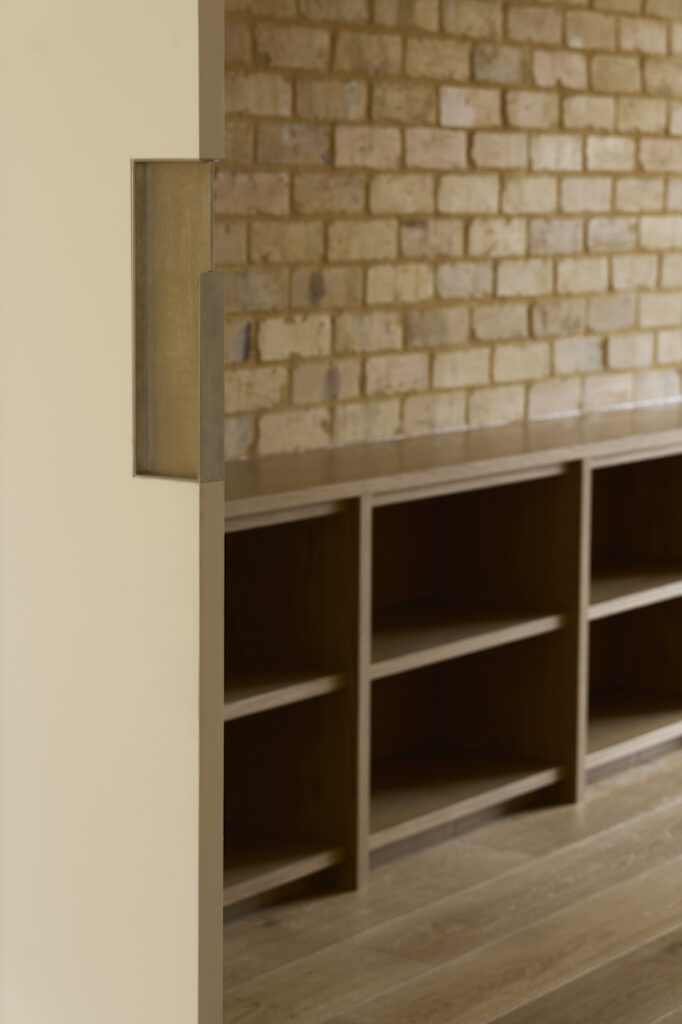
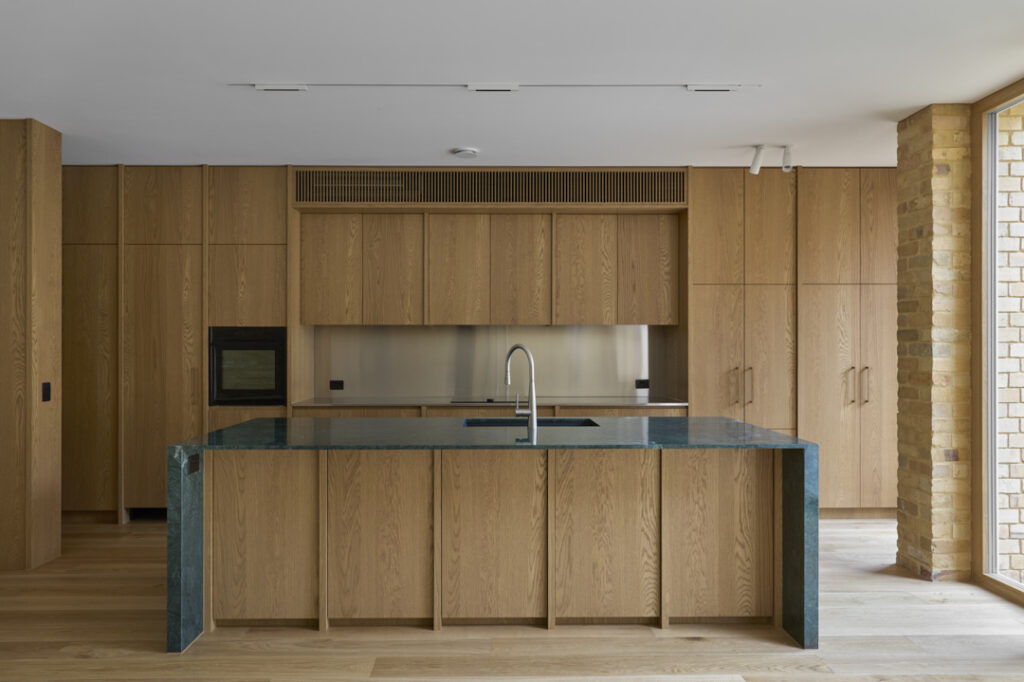
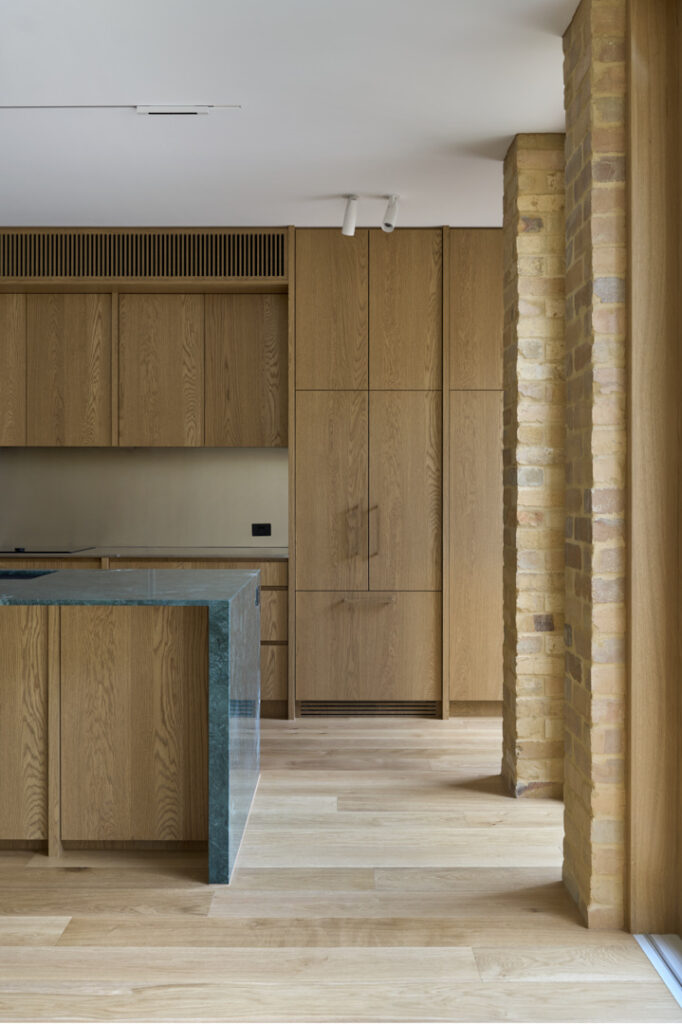
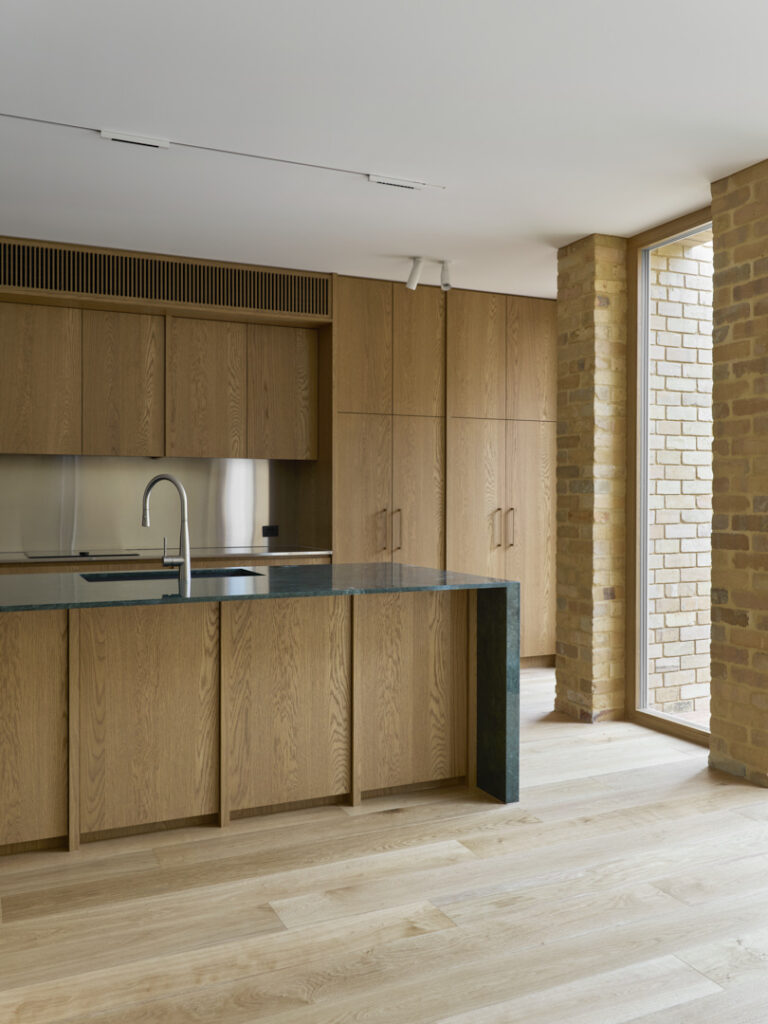
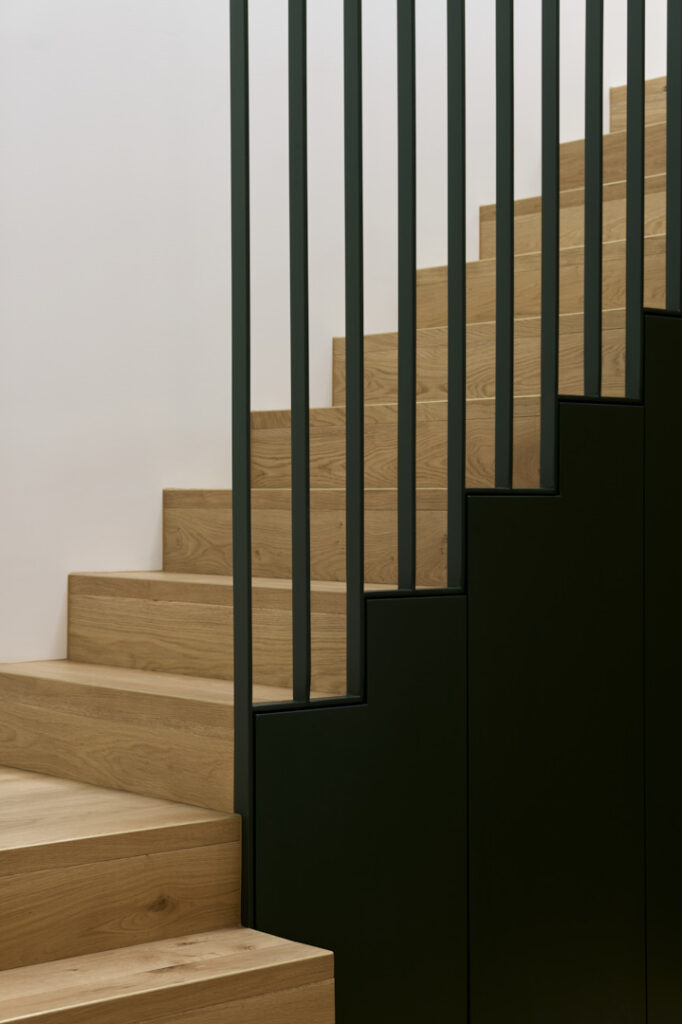
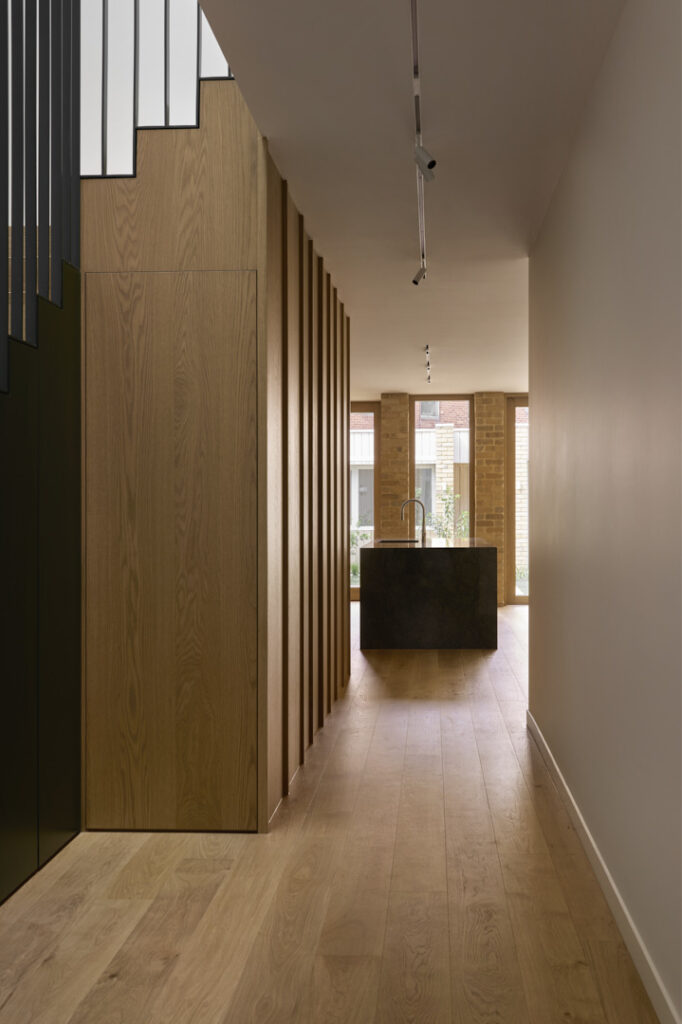
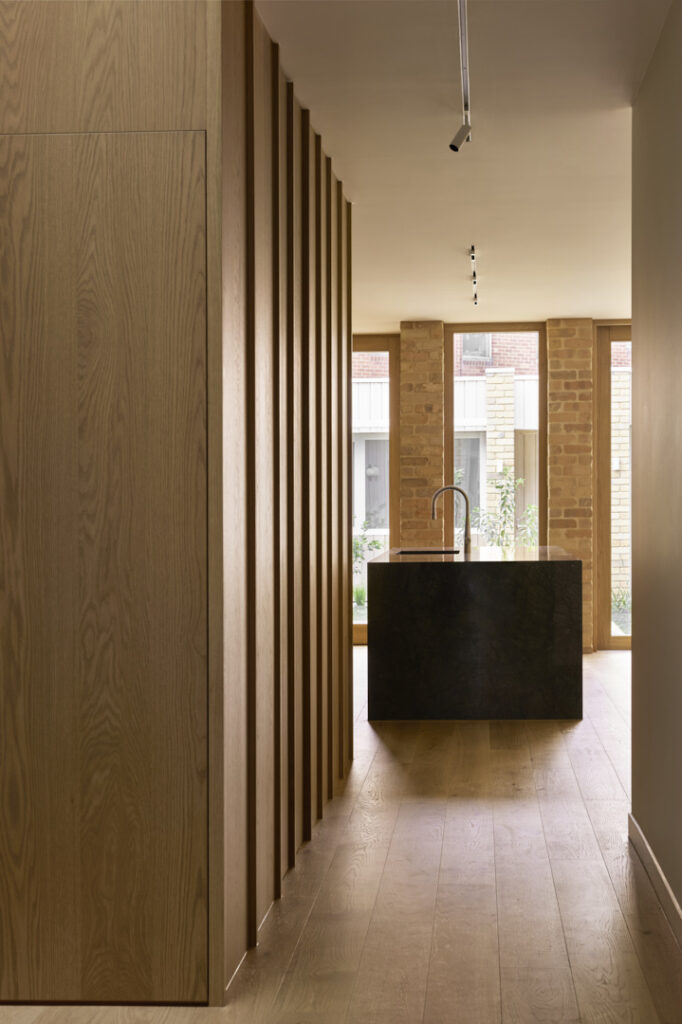
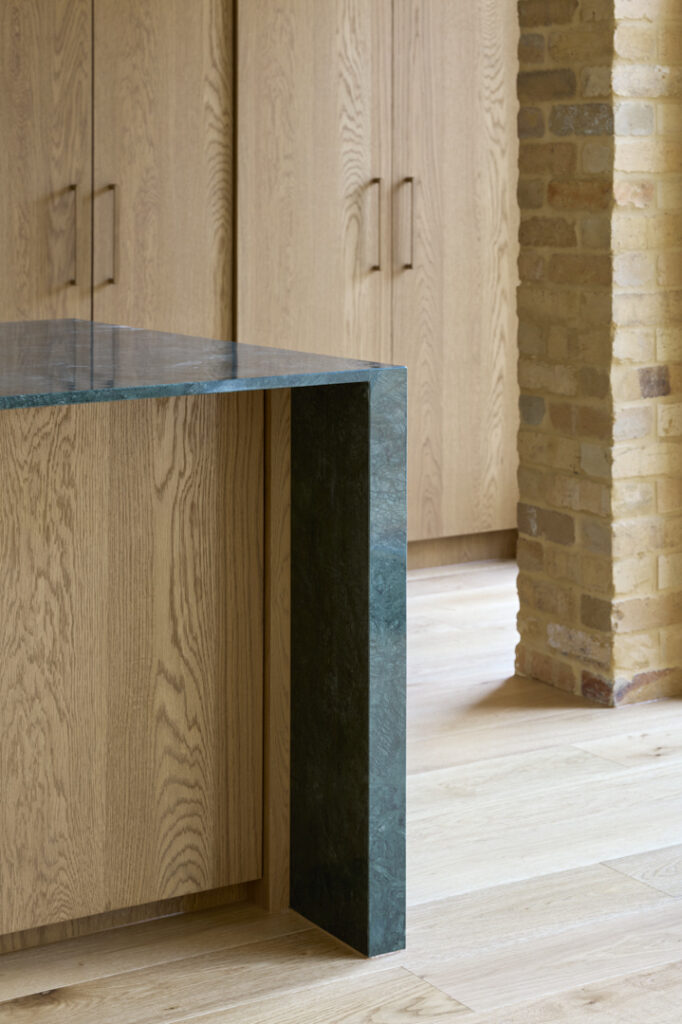
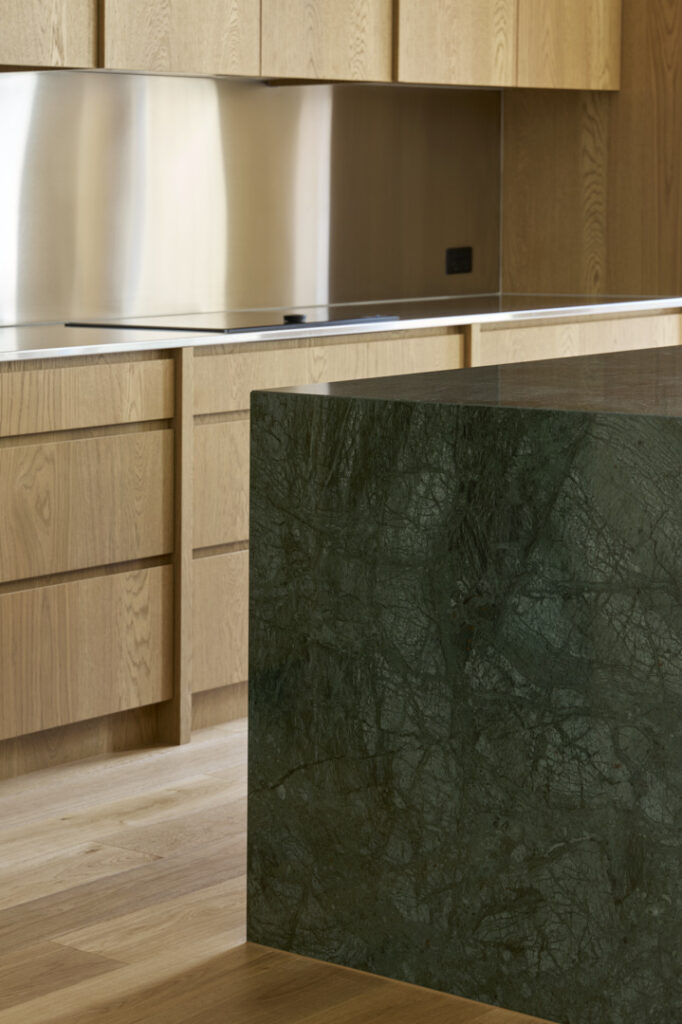
Material selections follow a restrained logic of natural texture, timber warmth, and tonal continuity between retained and new fabric.
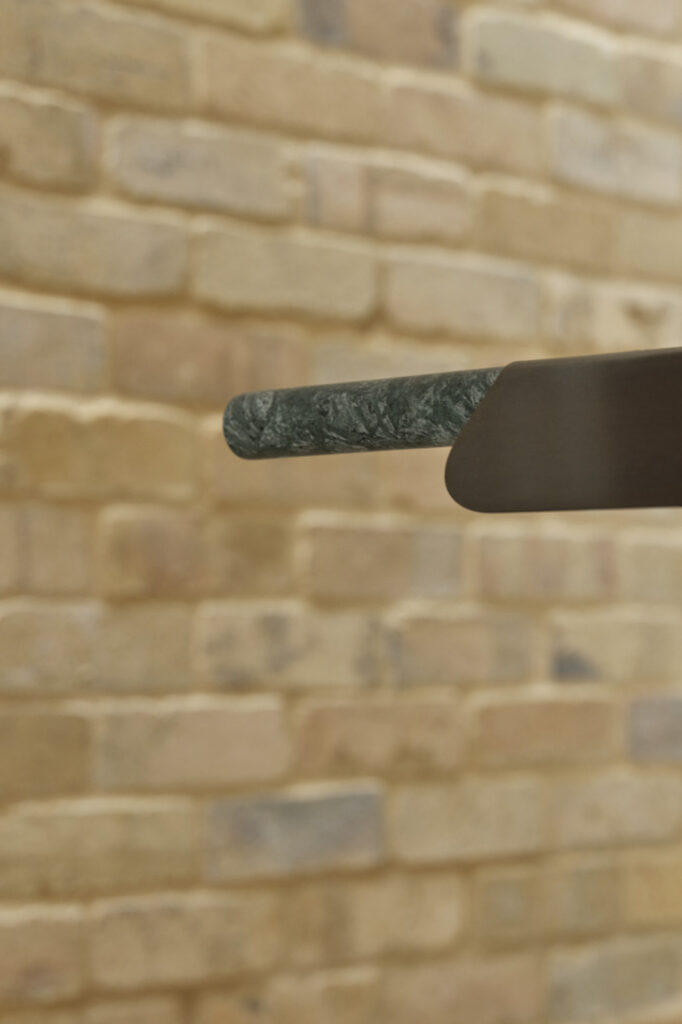
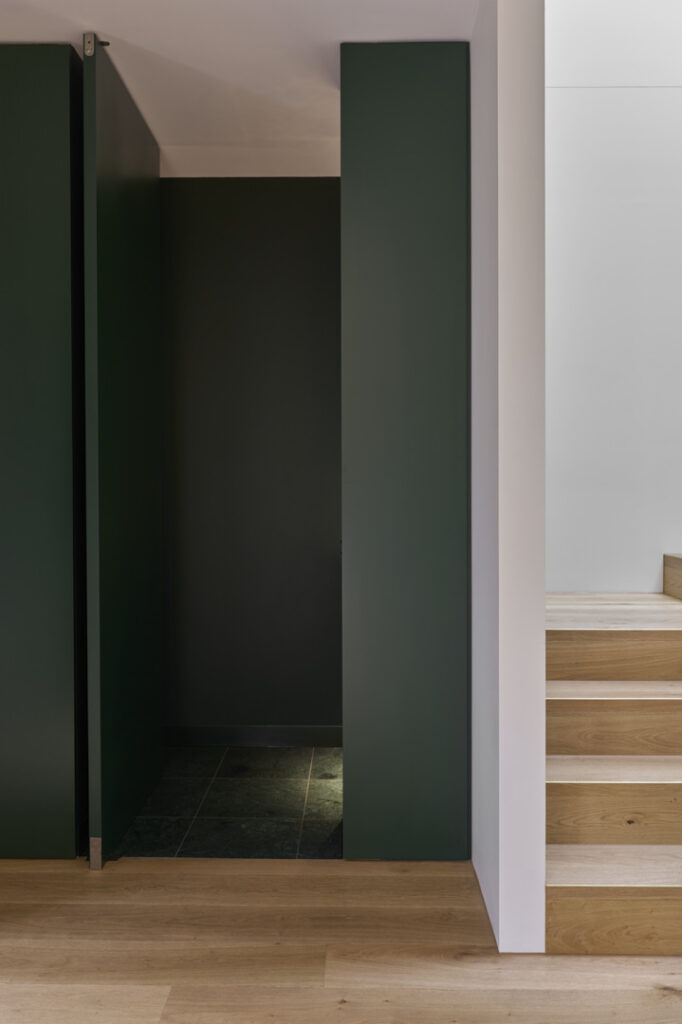
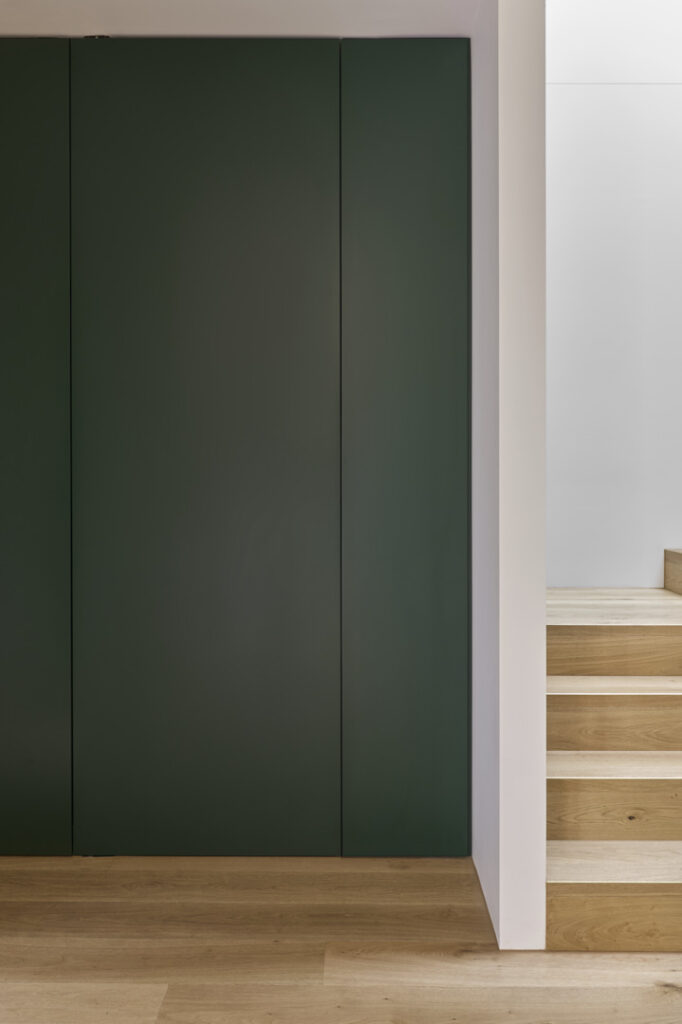
An early observation of the clients’ affinity for green informed the introduction of Guatemala green marble, around which the interior palette quietly coheres.
Light and material together establish an atmosphere that is composed, grounded, and enduring.
Comfort as Lived Experience
While Passivhaus performance is measured numerically, its true impact is experiential.
Within Fitzroy House, comfort is defined by:
- stable internal temperatures across seasons
- filtered, healthy indoor air
- significant reduction of urban noise
- absence of draughts and condensation
- quiet environmental consistency
These qualities reshape the experience of inner-city living, aligning environmental performance with long-term wellbeing.
Collaboration and Craft
Certification-level retrofit within a heritage context depends on collective precision.
The project is realised through close collaboration between architect, builder, consultants, and specialist trades — led by Hone Built’s careful construction methodology and supported by an experienced Melbourne-based consultant team.
Here, sustainability is carried not by gesture, but by shared discipline across design and construction.
Toward a Low-Energy Urban Future
Still progressing toward completion and certification, Fitzroy House represents more than an individual renovation. It suggests a broader direction for Melbourne’s inner suburbs:
- heritage streetscapes retained rather than erased
- embodied carbon conserved through reuse
- operational energy dramatically reduced
- long-term urban living sustained
Through deep retrofit, sustainability is reframed as continuity rather than replacement.
Project Overview
Suburb – Fitzroy
Period – Post War Modern
Heritage Status – Contributory within HO334
Originally Built – 1950s
Completed – 2025
Lead Team
Architect & Interior Designer – Jane Cameron Architects
Project Architect – Jamie Lim
Builder – Hone Built
Passivhaus & ESD Consultant – Paul Grey, Detail Green
Passivhaus Certifier – Marcus Strang, HIP V. HYPE
Garden Design – Lucy Draffin
Photography — Jack Lovel
Engineering & Technical Consultants
Building Surveyor – TWC Group
Consulting Arborist – Arbor Survey
Land Surveyor – Land Dimensions
Quantity Surveyor – Geoffrey Moyle, Cost Planner
Storm Report Consultant – Designing Energy
Land Surveyor – Land Dimensions
Storm Report Consultant – Designing Energy
Structural & Civil Engineer – ORANIK Consulting Engineers
Traffic Consultant – Barleys Traffic Management
Building Performance & Envelope
Mechanical Ventilation & Heat Recovery Ventilation (MVHR) Designer & Supplier – Fan Tech
Mechanical Sub-Contractor – Passivetech
Weathertight & Airtight Membranes – Pro Clima
Window & Glazed Door Supplier – Logikhaus
Specialist Trades & Suppliers
Joiner – Urban Craft Joinery
Lighting Designer/Suppliers – George Stavridis, Lights Lights Lights
Continuity Across Time
Across Toorak, Ivanhoe, and Fitzroy, different architectural eras demand different responses — conservation, adaptive reuse, or environmental transformation.
Yet each project asks the same question:
How can existing buildings continue meaningfully into the future?
At Fitzroy, the answer lies in deep retrofit — where heritage presence, material memory, and ultra-low-energy performance converge to shape a new model of inner-city dwelling.
We welcome conversations with homeowners considering deep retrofit, heritage renovation, or Passivhaus design in Melbourne — often beginning with a calm and informed Master Plan.
You can also read reflections from past clients and collaborators on our testimonials page.